Showing posts with label land-use-efficiency. Show all posts

Monday, October 7, 2019

Don’t buy organic food if you want to seriously address climate change


As we approach the 2020s, many consumers have accepted the marketing/activist narrative that organic farming would be the best option for food safety and to mitigate the most damaging effects of climate change. The inconvenient truth is that organic farming is a terrible option from a climate change perspective. Its dependence on manures and compost involves huge, but rarely recognized, greenhouse gas emissions in the form of very potent methane and nitrous oxide.
But perhaps its biggest climate change issue is that organic farms are mostly less productive per unit area than “conventionally” farmed land. With rising food demand driven mostly by rising standards of living in the developing world, there is a need to boost farm production, and that means the very undesirable conversion of forests or grasslands to agriculture in places like Brazil. That leads to major carbon dioxide release from what had been sequestered carbon in the soils, and also the loss of biodiversity and other environmental services provided by those natural lands.
Background on “organic” farming
The organic farming movement started in the late 1800s and early 1900s in response to issues that had arisen in plough-based agriculture, which had converted most of the prairie land in the American Midwest to farmland through the process of sod-busting.
Spurred by the Homestead Act, Americans moved to the Midwest to claim their 640 acres of government land give-away. Most used the new polished steel plow made by the John Deere company to turn what was once a diverse grassland ecosystem into what became one of the most productive agricultural regions in the world. However, the way that these farmers needed to control weeds and make the land suitable for planting was to mechanically disturb the soil, and that lead to the death of many soil organisms and the breakdown of the organic matter that they had made using the energy supplied by the plants that grew there.
Over time, as the soil was degraded by this tillage, it became less fertile, less able to capture and store rainfall and less productive. The common solution was often to move on to “virgin” land and do the same thing to the biome there.
The true innovation of the early organic movement was the realization that for a soil to remain productive over time, the organic matter content of the soil had to be replenished after each crop harvest. The movement’s solution was to import large quantities of organic matter from other sites in the form of the manure or composted manure from the animals fed on those other agricultural acres. This worked, but it was never, nor is it now, a viable solution for US or global agriculture.
Even so, starting with the Rhodale Institute’s publication of “Organic Gardening” magazine in the 1960s and the eventual establishment of a commercial organic industry in the 1970s, the mostly non-farmer consumers in US society were told the story that organic farming was the best way to both feed us and protect the environment.
In 1990, the USDA (US Department of Agriculture) was charged by Congress with establishing a national organic standard to supersede the fragmented certification systems that had evolved to that time. It was a major struggle because the very science-oriented USDA was at odds with the early organic marketers who had focused entirely on the narrative that what is “natural” is always best. The marketers finally prevailed. When the national organic standards were issued in 2002, they were not based on science but rather on the naturalistic fallacy.
unnamed file
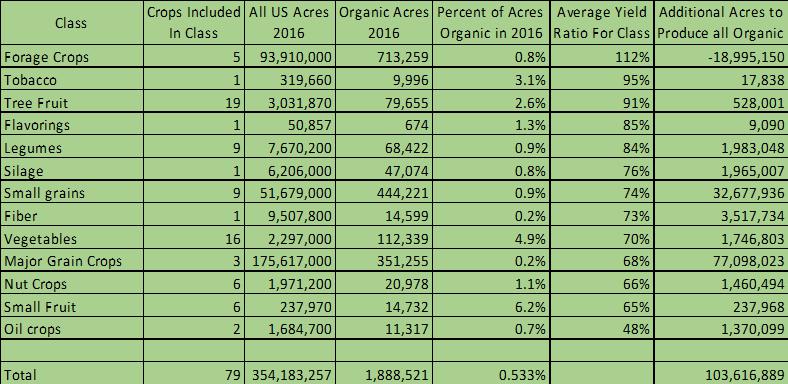
2016 US Crops By Class

So here is the big picture. The only crop category for which organic yields were higher than the 2016 US average was for forage crops for feeding animals. To have produced all of the US agricultural output from 2016 as organic would have required more than 100 million more acres to have been farmed—an area greater than that of the entire state of California, the third largest US state. That amount of new land suitable for farming clearly does not exist in the US, and so that shortfall would induce more conversion of forest and grassland into farming in places like Brazil, leading to major releases of previously sequestered carbon in those soils

US Forage Crops 2016

There were higher yields for organic Hay and Haylage for animal feed in 2016, but for other animal feed crops, the organic yield was quite a bit lower. 17.1 million acres of alfalfa is grown for hay, mainly to feed dairy cattle. 1.71% of that land is in Certified Organic acres. Most of that land is much less productive.

Plant-based protein in an important component of the human and animal diet, but only relatively minor crops like pinto beans and Austrian Winter beans had higher yields as organic crops in the 2016 season. Nearly 2 million additional acres would have been needed to produce these crops as “Only Organic.” This is in spite of the fact that these crops require much less nitrogen fertilization, because they have an association with soil bacteria that fix atmospheric nitrogen for them in trade for energy.


Corn, soybeans and sorghum grown for grain accounted for 50% of all US crop acres in 2016. These crops provide most of the feed and biofuel for the US, as well as many major food ingredients. To have produced these crops as organic would have required 77 million acres to be farmed, something that would drive major land use conversion in places like Brazil and the associated climate and biodiversity impacts of that change.

Small grains are a major part of the human diet. With the exception of the relatively small crop rye, these plants do not yield very well in organic systems. To have supplied the domestic and important global market for these grains as organic would have required 33 million more planted acres, an area comparable to the entire state of Arkansas. Since many of these crops have quality issues associated with where they are grown, there really aren’t places in the US or the rest of the world where this could happen.

The only vegetable crop for which organic yields were higher was sweet potato. Organic represents 4.9% of total vegetable acreage in the US – much more than the overall 0.5% for all crops. Since many vegetable crops do best in specific climatic zones, that significant current organic footprint probably serves to raise overall prices for consumers, even if they do not purchase organic. When that issue is added to the fear of pesticide residues on vegetables driven by the Environmental Working Group’s “Dirty Dozen List,” this only contributes to the missed health advantages of vegetables in the diets of many consumers.
To have produced all the 2016 US grown vegetables as organic would have required 1.75 million more acres to be grown—something clearly not possible.

Tree nuts are considered to be a very healthy component of the diet, and may even reduce overeating that causes obesity because they make consumers feel full. These crops only flourish in certain climates, so there is no possibility that they could all be raised as organic. That transition would require 1.5 million more acres to be dedicated to those crops.

Organic yields of small fruits are often much lower than the national average. This is particularly true for strawberries, cranberries and wild blueberries. The one exception is tame blueberries, mostly in Washington state. To have produced all of this healthy fruit as organic would have required 238,000 more acres, which simply do not exist in areas with a suitable climate. In the case of strawberries, if the 11.6% of that valuable coastal land had been grown conventionally, there would have been 194 million pounds more strawberries available to consumers, probably at a lower price.

Organic makes up 2.61% of the land used to grow tree fruit and grapes. To produce all the fruit as organic would require a half million more acres of land. The organic vs. conventional citrus crop data is complicated by whether the crops are grown in California or Florida, where a devastating invasive bacterial disease has dramatically reduced yields. The best hopes for the future of the California industry depend on mostly non-organic pest control solutions.

Organic Tobacco constitutes 3.1% of the total acreage of this cancer-causing crop. Hops production, which is a booming industry these days for craft beer brewing, is 1.3% organic. Sunflower, which is the most significant crop on this list, is planted on 2.7 million US acres, and an additional 1.1 million acres would be required to produce it as organic.
Most cotton production has shifted to India and other places in Asia and Africa, because it is one of the very few crops grown in those regions with big grower benefits of insect resistance and herbicide tolerance. Still, there are 9.5 million US acres grown and it would take another 1.5 million acres to produce this important fiber crop as organic.
unnamed file
Conclusion
So the good news is that organic remains a tiny part of US agriculture. The not so good news is that for key healthy fruit and vegetable crops, these antiquated farming methods are enough of a factor to raise the prices for even those who don’t buy organic.
Eliminating organic agriculture would not be nearly enough to help with climate change mitigation, but some alternative marketing category that would reward growers who practice the best kind of climate-friendly farming, those who utilize no-till methods and cover crops for instance, could make a real contribution. As consumers, our most climate-responsible buying behavior should be to reject organic and its false narratives.
Steve Savage is a plant pathologist and senior contributor to the GLP. Follow him on Twitter @grapedocHis Pop Agriculture podcast is available for listening or subscription on iTunes and Google Podcasts.
This article has been adapted from a presentation given by Steve Savage titled Care About Climate Change. Don’t Buy Organic and has been reproduced here with permission.
The GLP featured this article to reflect the diversity of news, opinion and analysis. The viewpoint is the author’s own. The GLP’s goal is to stimulate constructive discourse on challenging science issues.


Saturday, January 21, 2017

Whole Foods Wants To Sell You Slower-Growing Chicken. That Is Probably A Bad Idea


(This post originally appeared on Forbes on 1/20/17)

One challenge of being a modern food consumer is knowing what to believe or not believe in terms of food production narratives. There is a new campaign claiming that going back to older, slower growing chicken breeds is the right thing to do. There are some good reasons to reject that idea.

Most Americans enjoy eating chicken. On average we each consume about 90 pounds per year, a three-fold increase compared to per capita consumption in 1960. Chicken producers have kept up with this increasing demand even as our population has also increased. What was once a luxury food has become a very affordable option. Chicken remains an economically attractive choice for consumers, in large part because of increases in the production efficiency of modern chickens. Particularly in the last century, chicken farmers have consistently mated their best roosters with their best hens and steadily shifted their flock genetics towards more and more efficiency. Today, chickens are the most efficient of our meat animals in terms of how much grain it takes to produce each pound of final product. That also means more efficiency in terms of water and land use. Overall, this history is a good example of increasing sustainability.

While this progress has been a positive for consumers and the environment, there are some advocates saying that we should go back to using earlier, slower growing breeds of chickens. They claim that the rapid growth compromises the welfare of the birds and that slower growing chickens are a more ethical choice. The slow growth argument is that the weight gain of the chicken has outstripped its bone development so that the chicken becomes physically compromised, at least in the case of the birds kept around longer as breeding stock. In a recent article by Dan Charles for NPR, that concern seemed to be supported by William Muir, an independent animal science expert from Purdue University. I wrote to Dr. Muir and he said he had been misquoted. He and other industry experts say that chicken breeding has been simultaneously focused on weight and bone strength. 

By several objective measurements, modern chickens seem to be better off. Mortality rates are down substantially. The houses in which chicken are raised have better climate control and the flocks are protected from disease by vaccination.   Antibiotics were once used to improve gut health but that practice has been phased out. As of 2017 there is no longer any feeding of dual-use, animal/human antibiotics for growth promotion in chicken. This website has a helpful video about how chickens are raised.

The upscale grocery retailer, Whole Foods, is asking its suppliers to make the switch back to slower growing breeds. Some animal rights groups are putting similar pressure on the companies that supply chicken to restaurants. Is there really a conflict between sustainability and animal welfare when it comes to our most popular meat?

As consumers we would be wise to be skeptical about the assertion that fast growth is bad for the birds. Not everything you hear about chickens is true. For instance many consumers have been convinced that they should buy chicken labeled as not having added hormones even though no chickens are given hormones and haven’t since the 1950s.

Some of the ramifications of shifting back to slower growing chickens
Last week the National Chicken Council released a detailed report about what a change to slow-growing birds would mean in terms of resource-use and production costs. I pulled out some of the statistics that were most compelling to me as a crop scientist. In the hypothetical case that one third of the chicken industry switched back to slower growing birds, it would substantially reduce the overall supply of chicken for only a 14 day change in the growing cycle of the birds. The drop in feed-use-efficiency would mean that 33.5 billion more pounds of feed would need to be devoted to chicken production which would represent 670,000 tractor trailers full of grain. Currently each acre of grain (corn/soy) can feed 344 birds. The same amount will only feed 224 of the slow growing birds. That would translate into 7.6 million acres of farmland needed to support a 1/3 conversion. There are also ramifications for water use, the amount of manure produced (28.5B pounds), and of course the cost ($9B at the producer level and much more at the consumer level).

NCC is encouraging the foodservice and retail industries to fully consider all the economic and environmental ramifications of a potential change in chicken genetics. They are also supportive of research to objectively evaluate questions about animal welfare and health as effected by growth rate.

It is likely that some food industry players could profit from the creation of another up-sell category for meat. However it is appropriate to ask whether that is indeed a responsible path to take. Consumers have good reason to think this one through before going along with this marketing campaign.

You are welcome to comment here and/or to email me at savage.sd@gmail.com


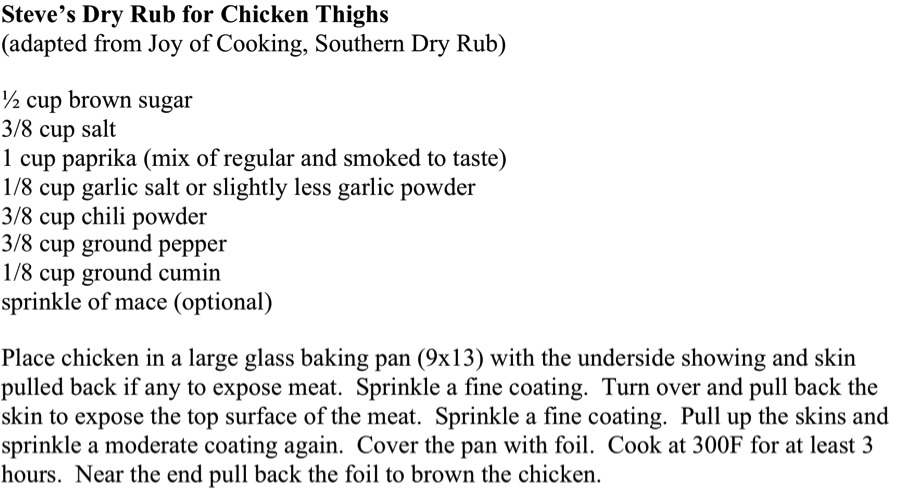
(Just to show that I take my chicken seriously, here is my favorite recipe for home made, dry rub chicken)


Monday, October 12, 2015

The Productivity Of Organic Farming In The US: Mind The Gap


This warning from the London "Tube" could apply to organic farming
(This post originally appeared on Forbes 10/9/15)
The productivity of organic farming is typically lower than that of comparable “conventional” farms. This difference is sometimes debated, but a recent USDA survey of organic agriculture demonstrates that commercial organic in the U.S. has a significant yield gap.

I compared 2014 survey data from organic growers with overall agricultural yield statistics for that year on a crop by crop, state by state basis.  The picture that emerges is clear - organic yields are mostly lower. To have raised all U.S. crops as organic in 2014 would have required farming of one hundred nine million more acres of land. That is an area equivalent to all the parkland and wildland areas in the lower 48 states or 1.8 times as much as all the urban land in the nation. As of 2014 the reported acreage of organic cropland only represented 0.44% of the total, but if organic were to expand significantly, its lower land-use-efficiency would become problematic.  This is one of several reasons to question the assertion that organic farming is better for the environment.
The USDA conducted a detailed survey of organics in 2008 and then again in 2014. Information is collected about the number of farms, the acres of crops harvested, the production from those acres, and the value of what is sold.  The USDA also collects similar data every year for agriculture in general and makes it very accessible via Quick Stats.  It is interesting that they don’t publish any comparisons of these two data sets as they would be able to make comparisons on a county basis. By working with both USDA data resources I was able to find 370 good comparisons of organic and total data for the same crop in the same state and where the organic represented at least 20 acres.  That comparison set covers 80% of US crop acreage.


For 292 of those comparisons, the organic yields were lower (84% on an area basis).  There were 55 comparisons where organic yield was higher, but 89% of the higher yielding organic examples involved hay and silage crops rather than food crops. The organic yield gap is predominant for row crops, fruit crops and vegetables as can be seen in the graphs below.

The reasons for the gap vary with crop and geography.  In some cases the issue is the ability to meet periods of peak nutrient demand using only organic sources.  The issue can be competition from weeds because herbicides are generally lacking for organic.  In some cases its reflects higher yield loss to diseases and insects. Although organic farmers definitely use pesticides, the restriction to natural options can leave crops vulnerable to damage.
I’ve posted a much more detailed summary of this information on SCRIBD with the data at the state level.


There is some potential for artifacts within this data set.  If the proportion of irrigated and non-irrigated land differs between organic and conventional that would skew the data.  With lettuce and spinach it is likely that the organic is proportionally more in the “baby” category making yields appear dramatically lower.  But overall this window on farming is useful for understanding the current state of commercial organic production.  Since the supply of prime farmland is finite, and water is in short supply in places like California, resource-use-efficiency is an issue even at the current scale of organic (1.5 million cropland acres, 3.6 million including pasture and rangeland).

You are welcome to comment here and/or to email me at savage.sd@gmail.com. I'd be happy to share a data file with interested parties and to get feedback about where particular yield comparisons might be misleading.
A more detailed presentation is available at https://www.scribd.com/doc/283996769/The-Yield-Gap-For-Organic-Farming