Showing posts with label biotechnology. Show all posts

Sunday, July 24, 2022

Can Florida's Iconic Citrus Industry Survive Its Own Pandemic?


(This article was originally published on Forbes on January 26, 2022) 

For more than two years, human society has been dealing with ramifications of the Covid-19 pandemic and that already feels like a long journey. It has killed millions, caused significant human stress, and precipitated economic disruption. Unfortunately the timeline for its resolution is unclear. For the past seventeen years, the Florida citrus industry has been grappling with a pandemic of its own – in this case an exotic bacterial disease that plagues the trees grown to produce the popular and health promoting fruit and juices we enjoy (oranges, grapefruits, lemons, limes, tangerines…). This severe plant disease now occurs in all 45 citrus producing counties in Florida. The disease was first described in China in the early 1900s where it called Huanglongbing or “yellow dragon disease.” In the U.S. it is usually called “HLB” or “Citrus greening.” 

Asian Citrus Psyllid Adult (image USDA-APHIS)


In 1998 an insect called the Asian Citrus Psyllid (ACP) showed up in Florida and caused concern because it was known to vector this disease while feeding on the tree’s sap. However the bacteria didn’t get introduced into the state for a while, and it was not until 2005 that the first diseased trees were found. In the ensuing years the insect and disease spread to essentially all of the citrus groves in Florida where they threaten the very survival of this important industry ($6.7 billion total economic impact, 33,000 jobs, $1.816 billion at the farm level). However, both pests are also now present in other US citrus growing states and represent a looming threat to those industries. 

This story has been unfolding slowly over these many years. The reason such a long-running problem has returned to the news of late is that the USDA published a depressingly dark production estimate for the 2022 Florida orange crop. They project that it will be down to 44.5 million 90-pound boxes - only 18% of the crop seen in 2004 - prior to the HLB era (see graph below) 

Ever since HLB appeared in 2005, production has been dropping (graph by author based on USDA-NASS data)


How Low Can It Go? 


In Florida, this disease is causing considerable concern about the future. Once the bacteria have been introduced into the tree by the ACP insect, they become systemic. The infection leads to a 50-70% decline in tree root function, reduced tree vigor, fruit drop, and problems with fruit ripening. Infected groves generate lower and lower marketable crop yields over time. That financial strain has induced around 5,000 farmers to quit growing citrus altogether. Unfortunately the potential to shift to different crops (e.g. blueberries, strawberries, peaches, vegetables) is limited because of weather and competition from other US growing areas and from imports. Citrus used to be the most profitable option in South Florida and that is why it was grown on around 900,000 acres prior to HLB. The declining yield and acreage trends for oranges can be seen in the graphs below. 

Orange production has dropped both because of reduce acreage and because of declining yield per acre.  This has also been true for other citrus types (Graphs by author based on USDA-NASS data)


Particularly for the juice industry, critical mass is required for running processing plants. Therefore it has been necessary for the major brands to include imports from Mexico and Brazil. The one grower-cooperative juice brand that continued making a “100% Florida-grown” product for many years (Florida’s Natural) has no longer been able to maintain that distinction. 

So Is There Any Hope? 


As is often the case in agriculture – adversity has inspired a diversified, private/public research effort to identify and/or develop pest management options for this disease and its vector. Funding for this comes from the industry itself (eg. The Florida Citrus Research and Development Foundation), the state ( University of Florida/IFAS), the federal government (USDA) and private technology companies. In 2018 the National Academy of Science published a 287 page review of the research effort with inputs or reviews from 23 scientists. One of the key conclusions was that no single solution would be likely to solve this problem and that a diversified strategy was needed. The following is at least a partial list of the strategies that are being pursued for both immediate and long-term solutions to this challenge. 

Nutrition and water management – because HLB compromises the tree’s root system, it becomes more important than ever to provide nutrients via fertilizers. However, this is a challenge in the extremely sandy Florida soils because these minerals can be washed down below the rooting zone to become a potential groundwater issue. The state’s extension experts recommend “spoon feeding” of small doses of fertilizer at multiple times during the year delivered through the irrigation systems which are now used in virtually all the groves. Major additions of organic matter are also used at replanting and/or in later years, but it is a challenge to retain their effects in these soils. Overall, growers are advised to follow BMPs (best management practices) that do as much as possible to reduce the effects of HLB while also protecting the environment. 

CUPS - One fairly extreme but near-term option for growers who are planting new citrus stands is to use a system called CUPS –“Citrus Under Protective Screening.” The idea is to completely exclude the ACP vector by growing the trees under a protective 40-50 mesh high density polyethylene screen. 
There is an orange grove under this protective cover designed to completely exclude the insect vector of HLB (Arnold W. Schumann, University of Florida/IFAS)


This sort of structure costs around $1/square foot and the screen has to be replaced every 7-10 years. That capital investment can theoretically make sense because in addition to avoiding HLB damage, the trees begin to bear fruit within 2.5 years of planting vs the normal 5-7 year range. Still, economic analysis of this system suggests that it is only feasible for the “highest possible yield of premium-quality fresh fruit with a high market price” and that only with a high degree of market stability. 

Breeding New Citrus Varieties – there are several, long-running University and USDA breeding programs for citrus which have added HLB resistance to their goals in addition to other kinds of pest resistance, yield and quality traits, and consumer traits like easy-to-peel tangerines. There are some promising examples of new varieties coming out of these programs. There is also another ambitious inter-species hybridization effort working with a citrus relative called Poncirus trifoliata or “Japanese Bitter Orange.” That source of genetic diversity may provide “constitutive disease resistance (CDR) genes” in hybrids that can then be back-crossed to restore fruit and juice quality. Modern technologies like genome resequencing and transcriptome sequencing are used to speed-up this process. Poncirus hybrids are also being evaluated for relative resistance to the vector insect, ACP. 

Rootstock Breeding - with tree and vine crops there are usually independent breeding efforts for the part of the plant that grows above ground (scion) and that which grows below (rootstock). Researchers at both the University of Florida and the USDA have long-standing rootstock development programs that were seeking to address other disease and nutrition issues before HLB, but they have found a few of their hybrids to be promising for reduced impact from infections. In some cases they have observed reduced proliferation of the pathogen inside the tree. There is the possibility that this sort of bacterial growth reduction effect will move up to the grafted scions where the fruit is formed. They are also breeding for “dwarfing” rootstocks that enable early bearing, “ultra-high density” plantings suitable for machine harvesting – a potentially more economically viable option for the future. 

Biocontrol - pest management involving live biological control agents is an increasingly important part of the tool box for farmers in general. Researchers at the University of Florida’s research and education center in Apopka have been testing a benign strain of a different bacterial pathogen of grapes called Xylella. By injecting this organism into HLB infected trees it appears to be possible to delay the development of severe symptoms and thus keep the orchard producing longer. This option is not yet available to growers because it will require EPA registration, but research continues to determine how effective the protection could be for new trees and how often new injections may be needed. 

Genome Editing - The recent advances in genome editing technologies such as CRISPR are generating excitement for many applications ranging from human health care to agriculture. An extensive review of how this might be applied to counteract HLB has been published by Chinese researchers in the International Journal of Molecular Sciences. While the USDA and other global regulatory agencies have signaled that they will minimize barriers to this approach, it remains to be seen how the EU will respond to broad scientific support for a smooth regulatory path for this kind of technology. If instead, the EU follows its historic tendency to employ extreme precaution regardless of scientific advice, their influence on export markets will negatively impact this future option for Florida and other citrus growing regions. In any case, this solution will not be available soon because it takes several years to get from a gene edited cell to a tree that is old enough to generate buds for grafting on to rootstocks. Genetic Engineering: like many other brand-sensitive food industry players, the Florida orange and grapefruit juice producers have acquiesced to the pressure to display the insidious “Non-GMO” label even though there are no commercial “GMO” cultivars being grown. There was an excellent article written in 2013 about the early history of this pandemic and the concern that growers would be denied any transgenic tools with which to fight HLB.

There is an active genetic engineering research program being pursued by a multi-party team involving Texas A&M, The University of Florida, Southern Gardens Citrus, Purdue University, the University of California and the USDA. It involves identifying genes for antimicrobial peptides to counteract the HLB organism and then either getting those expressed in the trees or delivering them with the help of a benign version of a common citrus virus. In the later case the trees themselves would not be “GMO” and it would be possible to use the technology across many existing and new varieties. There are regulatory processes involved (USDA, EPA) but those are nearing completion. Even if the “conventional breeding” options are promising and less controversial, it is always logical to have a diversified strategy – especially for a perennial crop which needs solutions that will remain effective over something like the 20-30 year lifespan of a new planting. That National Academy of Sciences review from 2018 specifically recommended “expanded efforts in educational outreach to growers, processors, and consumers” about the topic of biotech options. Back to the Covid-19 pandemic analogy, disinformation abounds when it comes to both vaccines and “GMOs.” 

Conclusions 

So yes, the continuing HLB pandemic will result in a record low Florida orange crop in 2022. But there is still reason to hope that a combination of grower dedication and research to develop diverse strategies will ultimately mean that consumers can continue to enjoy these flavorful and health-promoting fruit and juice options. Finding solutions is not just important for the Sunshine State but also for other HLB-threatened states like Texas, Arizona and California.

Thursday, January 20, 2022

Salmon, apples and potatoes — 3 healthy and sustainable foods that you can buy now under the new “bioengineered” label

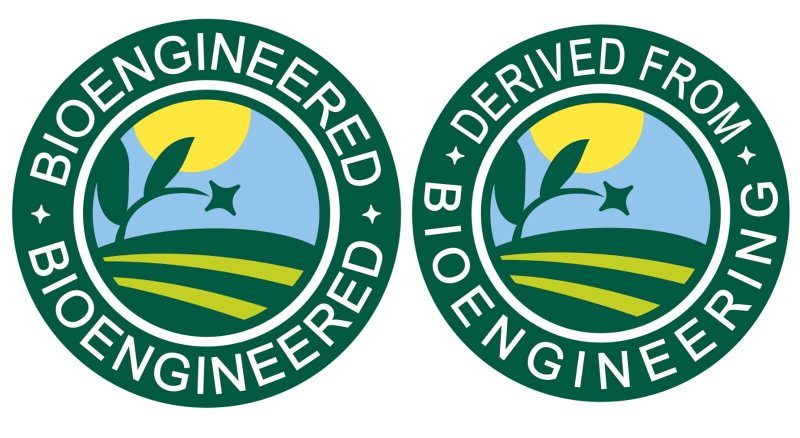
Label required by Jan. 1, 2022, on food products containing bioengineered products and byproducts. Credit: USDA.

Label required by Jan. 1, 2022, on food products containing bioengineered products and byproducts. Credit: USDA.

(this post originally appeared on Genetic Literacy Project - January 4, 2022

The “bioengineered” label for foods sold in the United States is now in effect. Any food or food ingredient that has been genetically modified must include a label that says “bioengineered,” or come with a phone number or QR code guiding consumers to more information online.

On the positive side, the national labeling law avoids the nightmare of state-by-state requirements. The major negative is that the label could well become the target for negative campaigning and marketing around the fear-based, anti-GMO narrative and misleading “Non-GMO” labeling that have permeated food-related messaging for so long.

Fortunately there are some exciting “consumer-oriented” products finally becoming available which can display that newbioengineered label that would help consumers to overcome the disinformation and embrace technologies that actually improve our food system and our ability to enjoy it. The most notable are non-browning Arctic Apples, non-browning Innate potatoes and healthy, fast-growing, AquaBounty Salmon, which I wrote about two years ago in an article in Forbes and on Medium titled: “Three Foods I Wish I Could Buy at Costco.” These novel options that are not only tasty and healthy, but also have benefits in terms of sustainability, climate-smart farming, and food waste reduction.

I’ll discuss each example in detail below, but the big picture is that consumers in some locations are now able to find these products for sale, although they are not yet in national chains like Costco or Walmart, which for now are bowing activist pressures. Supplies are limited, but there is also a hesitancy on the part of many retailers who don’t want to be “first” to step into something potentially controversial. The truth is that there is no justification for such controversy since all the safety or environmental questions have already been addressed during the extraordinarily long and rigorous regulatory process overseen by the USDA, EPA and FDA. The farmers that grow major commodity crops have been able to take advantage of biotech crops for a long time, but consumers and specialty crop growers are only beginning to have that opportunity. Let’s see what that looks like.

Arctic Apples

iuwbevw sgn itvuvgnd

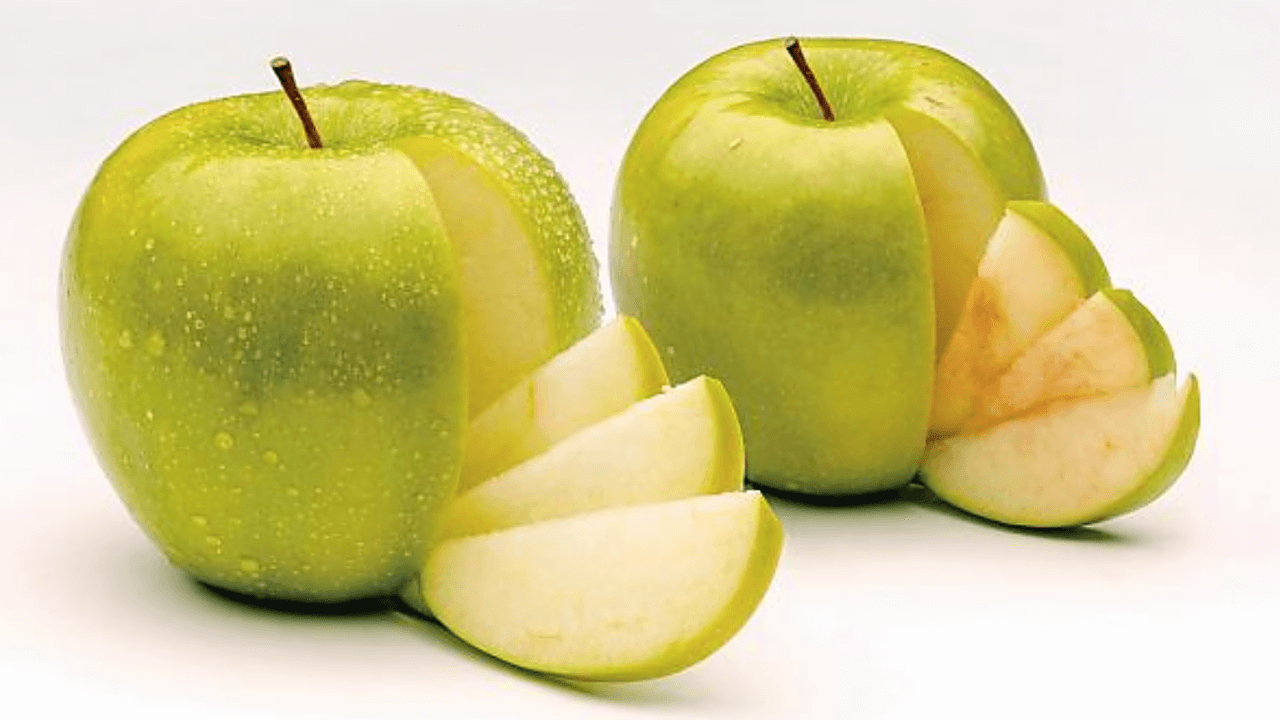
Twenty-five years ago a Canadian fruit grower named Neal Carter and his wife Louisa started a project to develop non-browning apples with the vision of reducing food waste and reversing the declining consumption of that healthy fruit. With a very small organization (e.g. less than 12), Okanagan Specialty Fruits Inc.(OSF) developed varieties of well known apple cultivars in which a gene for a particular enzyme was turned off or “silenced.” That enzyme is what turns the fruit brown when it is bruised or cut. Turning it off makes the fruit more robust in general and dramatically reduces the amount that is rejected from harvest through storage and processing. The other non-browning trait advantage is that Arctic apples can also be sold as a ready-to-eat, sliced product that retains the fruit’s full flavor, aroma and vitamin content.

OSF shipped me a box of these as whole apples a few years ago and I was able to take them to a potluck dinner a couple of hours after slicing and compare them with regular apples. Everyone who tried them thought they were great, wanted to be able to buy them, and didn’t worry at all about them being “GMO.” I think that will be a normative reaction once consumers can see biotech advantages first-hand instead of just hearing them demonized by notorious anti-technology groups and writers.

OSF was acquired in 2014 by Intrexon, a publiccompany where R.J. Kirk served as Chairman and CEO. As of 2020 ownership transferred to Third Security, LLC, a venture capital firm led by Kirk. Kirk encouraged a vertical integration business strategy focused on the sliced apple or “Fresh cut” market. Neal Carter continued to run the company as he still does today. Talking with him last week I was impressed by the scope of his expertise and understanding ranging from the growing the trees to the processing step, to nutritional information, food safety protocols, product distribution options, marketing and building of a solid public image. He also has a solid understanding of the science involved in the genetics of the Arctic® offering and how that technology has become ever more sophisticated over time.

OSF has purchased or leased 1300 acres of land for apple production land in Washington State where it currently grows 2.6 million trees. They have plans for additional orchards and their own dedicated slicing facility in the near future. Their apple variety options include Arctic Goldens, Arctic Grannys, and as of this year Arctic Fuji. Arctic Galas will be next. In the longer term, non-browning red skinned apples are on the list. They are also hoping to develop more robust, non-browning cherries that will avoid the stem decline or pitting that tends to occur with that delicious fruit.

Credit: Articapples.com

OSF’s apples are now being sold asstand-alone slices or as a component of fruit mix products packaged in cooperation with companies providing the other ingredients. There is also a dried version which is special because the slices don’t require sulfur products to prevent browning while they were being dried. These products are increasingly available at some regional grocery retailers; at certain convenience store chains and food service outlets. Some is now provided through military procurement. In some geographies the sliced fruit is now available for home delivery from Amazon Fresh. The convenience store and home delivery options have become even more popular during the pandemic. In the long term these slices might be found at a Costco or other national chains, but this will require expanding orchard plantings that that is a relatively slow process (4-5 years from planting to achieve full productivity).

Overall, Arctic apples address many societal needs and desires: a positive olfactory experience (flavor, aroma, appearance, and texture), convenience, health benefits, food waste reduction, and efficient use of farmland and inputs.

Innate Potatoes

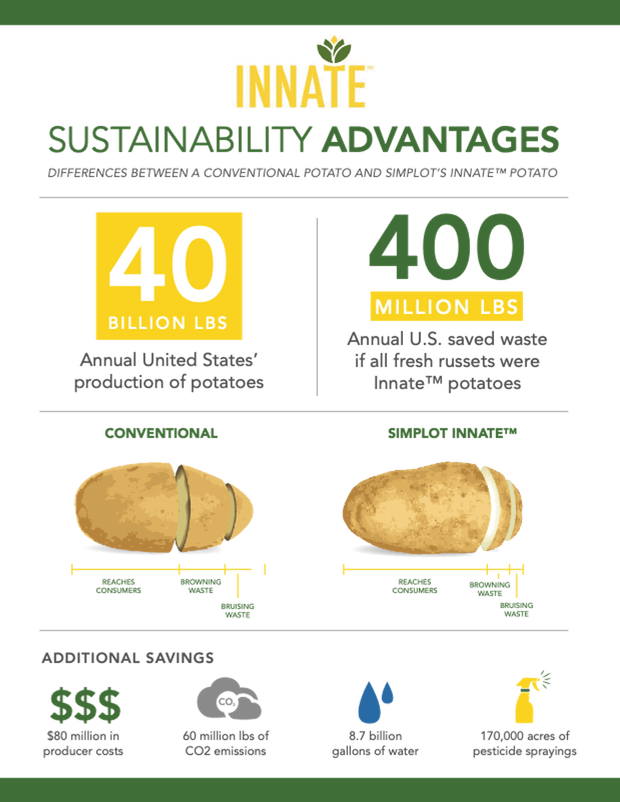
In the process of harvesting, cleaning, sorting and storage of potatoes, they can get bruised leading to black spots and browning inside the potato that makes them ugly and undesirable. This damage generates substantial waste all along the food chain from the packing house, to processors, to stores and through to the consumer. Black spots and browning are also very undesirable for making something like hash browns at home.

The Simplot potato company has been using biotechnology methods to “turn off” or “silence” a PPO gene that is similar to the one silenced in Arctic Apples. They have also turned off genes to reduce the amount of the amino acid asparagine in the potatoes that can turn into the naturally occurring compound acrylamide during frying. Acrylamide is linked to various health effects so having less is a nice outcome. These potatoes have been on the market since 2015 as “white russets” and were labeled as “bioengineered” even before the requirement to do so in 2022. This has not been controversial with the consumers who have had access to the product, mainly at regional grocery chains and restaurants, not in national chains like Costco, Safeway, Kroger, etc. Again this is partly because of retailer’ hesitancy to “be first,” but as the supply of these potatoes increases it will be interesting to see whether that picture can change

Simplot has other grower- and consumer-oriented potato improvements in the development pipeline. They have moved genes from wild potatoes to make their potato cultivars more resistant to late blight – a fungal disease that caused the Irish potato famine in the 19th century and which still requires substantial control efforts by potato farmers today. That trait is “cisgenic” or “intragenic” in that it is based on potato genes being used in potatoes.

Simplot also added these resistance genes to the potato cultivars typically grown in Bangladesh and Indonesia and provided them for free to those farmers. They are also working on resistance to a virus disease (Potato Virus Y) which has become a bigger issue for North American potato farmers since an insect called the potato psyllid has moved into the Northwest. That pest movement has likely enabled by climate change in that pest can now survive the warmer winters in that major growing region. Hopefully, the anti-technology voices won’t deprive the farmers of these pest resistance traits as they did successfully with the Colorado potato beetle resistance trait developed by Monsanto and first sold in 1997. Growers saw great benefit from those “NewLeaf Potatoes,” but the controversy led to their removal from the market in by 2001.

Simplot has future plans to use CRISPR on russet varieties and even extend them on smaller, non-Russet potatoes. They recently announced they are working with the strawberry breeding company, PSI to make various consumer-oriented options in that popular fruit crop using gene editing. Simplot has also received a CRISPR license to work on browning and bruising reduction for avocado! That could prevent a lot of food waste at the consumer level.

The many sustainability advantages of Innate non-browning potatoes. Credit: Simplot Biosciences

Overall the Simplot efforts address many positive societal benefits: food waste reduction, enhanced consumer experience, health benefits, farmer pest management and land-use-efficiency.

AquaBounty Salmon

The third food is a kind of Atlantic salmon that has been improved using biotechnology so that it can grow more rapidly and require less feed while still having the highly desirable nutritional content of other salmon (e.g. the heart-healthy omega-3 fats). The US imports ~400,000 metric tons of farmed Atlantic salmon each year, around 16% of the growing global demand (Norway, Chile, Canada and Scotland are the largest producers).

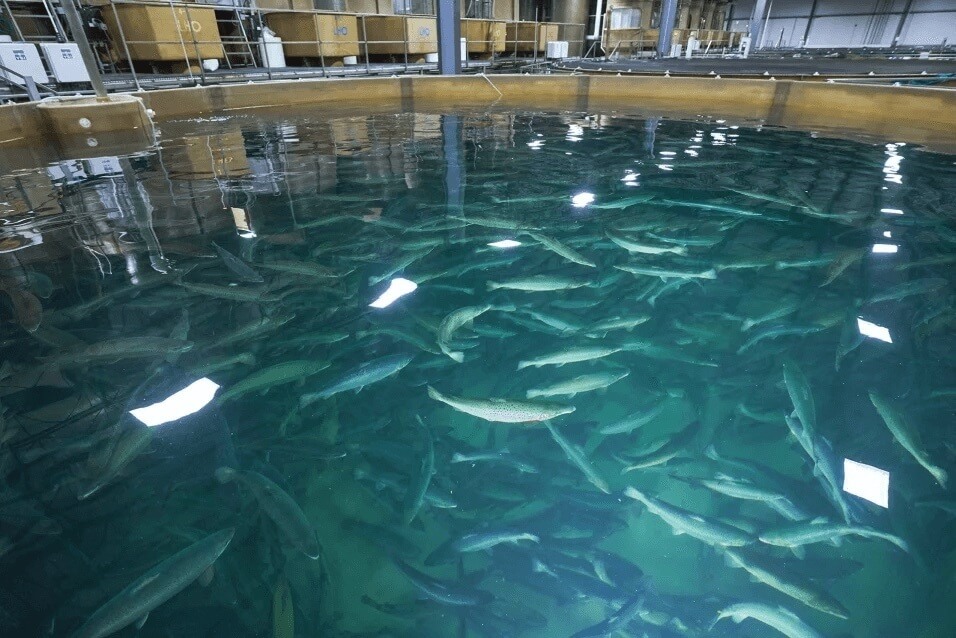
AquaBounty salmon are raised in bio-secure, re-circulating, terrestrial aquaculture systems (RAS) that return 95% of the water each day and remove any sludge for use as fertilizer on nearby farms. In the tanks the fish can be carefully monitored. They are also free from the parasites and pathogens found in the ocean so they don’t need antibiotics or vaccines. Another advantage is that they are not exposed to ocean pollutants like heavy metals or microplastics.AquaBounty salmon can be raised anywhere such a facility can be built – the first one is in near Muncie Indiana so the transport carbon footprint is minimized to many US markets vs international imports.

Salmon swimming in tank. Credit: AquaBounty

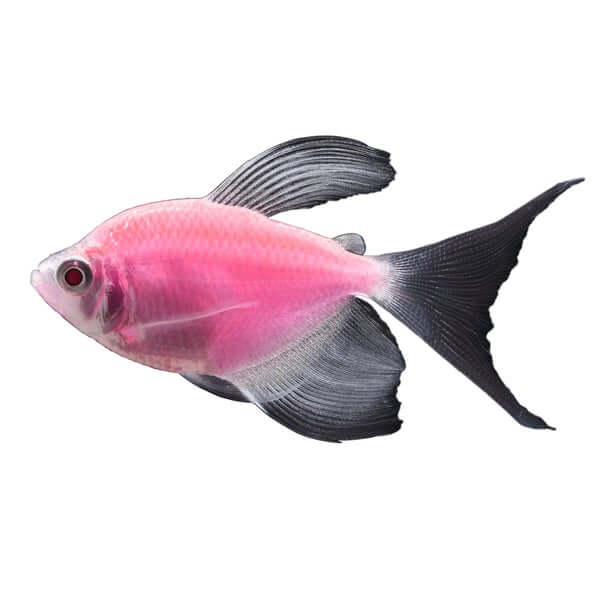
While this desirable fish option is now commercially available for some Americans and Canadians, it will take time to expand the number of production facilities sufficiently to serve national food retail chains like a Costco. Unfortunately my home state of California might never be on the list for local production. There is a state regulation against raising these “GMO” fish. There is no rational reason; it isn’t that there is danger of these fish getting loose in the Pacific Ocean (they are all sterile females and the tanks are secure). I’m still trying to trace the “logic” here, but ironically there is an exception in the state law for aquarium hobbyists to buy novelty “Glofish” that are genetically engineered to glow because they have DNA from jellyfish.

It makes no sense to allow anyone to buy cool“GMO” pets and not allow local production of one of the most resource efficient, environmentally friendly, safe, healthy and delicious food production options that will eventually be available to most regions.

What’s next?

If you want to know more about the label, and which foods or ingredients will be labeled as such, check out the USDA website and hear a good discussion featured in the first part of this podcast.

If you as a consumer are excited about these options and would like to see more innovative food products in the future, I would encourage you to seek them out in stores or on-line and to ask for them at your favorite retailers. Our best hope of overcoming the decades-long, fear-based campaigns against modern biotechnology is to finally “vote with our food dollars” and let our voice be heard through the comment boxes or websites that are available.

Wednesday, May 1, 2019

Florida Citrus Industry Is Facing An Existential Threat From Bacteria, But A Virus Offers Hope


Orange Juice (Image by AlbanyColley, Pixabay)

(This article was originally posted on Forbes on 4/30/19) When I was growing up in the early 1970s there was a ubiquitous television ad promoting Florida orange juice including the line, "a day without orange juice is like a day without sunshine." That "dark day" could be approaching soon, at least in terms of the juices we get from the "Sunshine State" and the livelihood of the farmers who grow the trees that have long supplied us.

The iconic orange juice industry in Florida is facing an existential threat because of a severe bacterial disease of citrus that was introduced to the US from Asia in 2005 (the Asian Citrus Psyllid insect that helps to spread it was first found in Floria in 1998). A Florida homeowner may have inadvertently introduced the bacterium to the US in citrus budwood he brought home from Asia to graft onto his backyard trees.  The malady is often called "Citrus Greening," but in Asia it is known as Hualongbong and so we now tend to call it HLB. HLB has since spread to virtually all the back yard and commercial citrus trees in Florida, killing many of the trees and forcing the growers to struggle to keep the remaining ones alive with intensive nutrient feeding and other stop-gap measures.  


Oranges showing symptoms of "Greening" or HLB (USDA image)


In 2013 journalist Amy Harmon wrote an excellent article for the New York Times about the history of this crisis titled: "The Race To Save The Orange By Altering Its DNA."  She described in detail how this long-anticipated threat finally materialized and how the Florida growers funded university research to explore possible solutions including genetic engineering.  A biotech solution was identified using some defensive peptides that are naturally made by spinach plants, but as Harmon explained, that sort of "GMO" solution was a hard sell to the big, brand-sensitive juice companies who buy the oranges.  I have been personally disappointed to watch the way that the juice companies have acquiesced to the pressure to use a "non-GMO" label.  That unfortunate marketing ploy now appears on all the brands including the one company that relies exclusively on Florida fruit as opposed to a mix with imports. This is a classic case of how "control of the food supply" is really the in the hands of anti-technology activist groups, not the big companies most often so accused.


This is my current bottle of FL grapefruit juice, but I have to "hold my nose" when buying in because of the misleading "non-GMO" label (Ruby Red grapefruit was generated using mutagenesis breeding, no a problem but definitely "genetically modified")


But realistically, deploying a biotech trait like this in a perennial crop would be quite slow because the growers would have to start over with new trees or possibly graft onto the existing rootstocks and regrow the entire above ground part of the plant.  In the mean time, the industry has been steadily declining and the fear is that it will reach a point where it just isn't worth maintaining the juice plants.  Orange juice can certainly be imported, but for a time the Florida industry was able to distinguish itself by its better tasting "not-from-concentrate" advantage.  

This same destructive disease now threatens the citrus industries in other states.  The disease and its insect vector are already present in California, but for now it has been contained to mostly urban/suburban areas in the southern part of the state.  If it spread to something like the tangerine/mandarin groves of the Central Valley and other parts of the $3.4 Billion California citrus industry, that would be a disaster (think Cuties(r), Halos(r), lemons, navel oranges, grapefruit etc.)
From my current bag of mandarins (again sadly with the misleading non-GMO label)

But I'm happy to say that today I'm writing about a newer technological approach to deal with this disease.  An extended public comment period ran through Tuesday May 30th in which the USDA asked for feedback on the question of whether or not to approve the commercial deployment of a different way to protect orange trees from the HLB disease.  It is something which could possibly be implemented much more quickly than by genetically engineering the trees themselves.  This is something that could be presented in a way that would make it sound scary, but its really not. 

There is a virus that infects orange trees called Tristezea.  It also came from outside the US and began causing problems in all the citrus growing regions of the US in the 1960s.  At first it was also a lethal disease, but eventually it was found that by avoiding certain rootstock types, the virus could infect the trees with no symptoms at all.  (Virtually all fruit crops have been grown on rootstocks for a centuries).  In Florida today all but the youngest trees are infected with Tristeza, but with strains that are benign for trees when they are on the rootstocks now used.  The new biotech solution is to add genetic sequences for the spinach antimicrobial peptides to the RNA of the virus, and then get that virus to infect orange trees.  This could be done with new trees when they are in nurseries, but it may be possible to also "graft transmit" the virus into at least they younger trees already out in the commercial groves.  In this case that new small branch does not need to take over, it just allow the virus+peptides to move into the other parts of the existing trees.  In any case, modifying the virus is far more efficient than having to separately engineer and propagate each of the popular citrus varieties in the industry.

A small scale trial that was run for several years confirms that this sort of virus inoculation can make the trees resistant to the HLB pest and to allow full productivity.  As part of that experiment, trees with no virus were planted all around these test blocks and then followed to see if the engineered virus ever moved into them (the virus can be transmitted by aphids under certain circumstances).  In fact the virus didn't move, though even if it did it wouldn't be a big issue.  Also, over time the modified virus loses the genes for the spinach peptides which is then another barrier to any sort of unwanted spread.  Also it is clear that the Tristezea virus does not have any bad effects on other crops or wild plants since the virus has been very widespread for decades without causing problems in other species.

I've included the comments that I submitted to the USDA below concluding with my hope that the experience in Florida will pave the way for using a similar approach in California if we ever have to save that industry as well. I sincerely hope that the USDA does approve this new method and I sincerely hope that those who control the juice plants will both help the growers that supply them and trust consumers to be smart enough to listen to the logic about this technology.

This is the Website about the USDA comment process:

--> https://www.aphis.usda.gov/aphis/ourfocus/biotechnology/brs-news-and-information/2019_brs_news/ctv_reopen_april2019
This is the link for comments followed by what I submitted:


-->

I am writing in support of this release permit as I believe that it is a very logical strategy with the potential to literally save the citrus industry in Florida. If it proves successful it could play a similar role in the unfortunately likely scenario that HLB becomes a more serious threat to citrus production in other regions such as California. I am a plant pathologist with a Ph.D. from the University of California, Davis. My own work there was with fungal diseases, but I spent a lot of time in the lab of Dr. Robert Shepherd, a National Academy virologist. Starting at that time in the late 1970s I had many close colleagues who were working on the early stages of plant genetic engineering and I have continued to follow that field ever since. The progress of the field has been remarkable. 

In preparation for this comment I read all the available documents from the USDA site and corresponded with some of the university researchers who have done the relevant work on issues like the potential for recombination and transmission of the modified Tristeza virus.


This approach of using an asymptomatic strain of the virus is particularly logical for this perennial crop. To engineer the orange scion itself would require the generation of separate "events" in each of the important cultivars and then a delay to graft those onto existing trees and bringing that new "top" into bearing. Using the virus makes it far more feasible to utilize more than one combination of antimicrobial peptides which will help to prevent the development of resistance in the HLB bacterial pathogen population. 


There are several convincing reasons that this strategy is likely to be safe with regard to any potential for spread to non-target citrus or to other plant species. There is very low rate of aphid transmission even under ideal lab conditions. The track record of zero transmission to sentinel plants in the previous limited release further demonstrates that the modified virus is extremely unlikely to move beyond the intended trees. The fact that recombination will likely lead to loss of the peptide part of the viral genome is another safety factor and will again allow for the deployment of different peptides in a follow-up grafting step if that is needed down the line. The fact that the Tristeza strains to be used are already ubiquitous in Florida citrus represents a multi-decade "experiment" showing that this virus represents no threat to other species or to citrus that is grown on the rootstocks for which infections by these strains are asymptomatic. With the tremendous advances in the speed, sensitivity and affordability of genetic assays, it will be possible to rigorously monitor the efficacy and safety of the strategy. As for the anti-microbial peptides from spinach - long experience supports their safety from a food point of view.


I believe that this release can be the culmination of an exemplary example of an effort funded by the grower community and partnering with the public, academic community to employ state-of-the-art science.


Friday, January 5, 2018

Yes, We May Have No Bananas, But Monoculture Wasn't So Easy To Avoid

(This article originally appeared on Forbes, 1/4/18)

Standard retail banana display - photo by Steve Hopson via Wikimedia Commons

In 1923, Frank Silver and Irving Cohn published a song that became a major hit for the Billy Jones Orchestra, with the signature line “Yes, we have no bananas; we have no bananas today.” It turned out to be sadly prophetic as, in the 1950s, the banana trees that supplied the entire global banana export business were wiped out by a soil-borne fungal disease known as “Panama Wilt.”

The industry at that time was almost entirely based on a single banana cultivar called “Gros Michel” (meaning “Big Mike”), and it was susceptible to infection by a strain of fungus called Fusarium. Once the soil of a given plantation was contaminated with that strain, any Gros Michel tree grown there would soon die.

By good fortune, a different banana cultivar that was being grown in the South Seas was able to substitute for Gros Michel as a commercial line, and this new “Cavendish” cultivar became the new banana of international commerce, as it remains to this day. (Check out this interesting blog post about the history of the Cavendish variety and how it actually passed through a greenhouse in England in that process! And here is another good post about the history of this disease and the industry.)

Unfortunately, it's about time for some band to cover “Yes, We Have No Bananas” because, evolution being what it is, a new strain of Fusarium — Tropical Race 4 — has arisen and it is lethal to the Cavendish. The disease is slowly making its way around the world, and since it can be spread in a particle of dirt on something like a boot, it will almost inevitably make it to the Central and South American growing regions that supply both North America and Europe with their bananas.

Although this unfortunate scenario has been on the minds of the banana industry for decades, it is now starting to get more attention in the mainstream press. One part of the story that has been shocking to these outside observers is that such a huge industry would ever be dependent on a single cultivar of banana. As Stephen Mihm put it for Bloomberg, this looming “bananapocalypse” is attributable to a vulnerability that comes from the practice of “extreme monoculture.”
While I understand why observers might be shocked that a nearly $12 billion industry depends almost exclusively on the Cavendish banana, I do want to push back on the implied conclusion that this represents some sort of irrational or irresponsible expression of “big ag” or whatever other demons are imagined by the Food Movement.

Banana tree dying from Panama Wilt (Photo by Scot Nelson)

When you see something that is a standard practice in a very large, nationally diverse and multi-company business like bananas, I would suggest that it is appropriate to ask not “what is wrong with this system” but rather, “What are the practical factors that drive this seemingly irrational practice?”

I’m not a banana expert, but in the mid-1990s, two of my first jobs as an independent consultant had to do with the banana industry. It was during the exciting early years of commercial plant biotechnology, and many industries were asking, “What might this new technology do for our business?” Both of my projects involved early-stage discussions between a major banana company and a plant biotech company — four different entities in all. These were “drawing board stage” projects, with the goal of figuring out if certain ideas could ever make economic sense: Would they be something worth years of effort and millions of dollars for research? Still, overall, biotechnology looked like a way for this industry to tap into genetic diversity.

The fun part for me was getting to do a deep dive into the details of how bananas are grown, handled, shipped and marketed. I got to travel to Honduras, Costa Rica and Ecuador to tour banana plantations and interact with experts at the major banana export companies. As I said, I’m not an industry insider, but I think I can shed some light on why there are not more kinds of bananas grown for export.

As modern consumers, we are offered an amazingly diverse selection of fresh fruits and vegetables year-round, so it is important to think back to the early days of this offer of plenty. Having grown up in Denver in the 1960s, I can recall that, except for a few summer months, almost the only fresh fruit options at the grocery store were bananas, apples and oranges. I have a podcast about why apples were ever on that list. But if you think about it, the very fact that we can so easily enjoy fresh bananas in temperate regions is a bit remarkable.

Bananas can grow only in regions where there is never frost, and they do best in truly tropical climates. How did a tropical fruit become a mainstream, reasonably priced, healthful, kid-popular fruit for people who experience winter?
In tropical regions, there is a great deal of genetic diversity among wild bananas and considerable diversity among the banana or plantain types that humans cultivate. However, very few of these bananas could ever meet the criteria needed to be a viable export crop.

A typical wild banana with seeds (image by Mkumaresa via Wikimedia Commons)

First of all, a banana for export has to be seedless. Many wild bananas have large, very hard black seeds – not something that has much consumer appeal. The bananas that people like are seedless because they have triploid genetics – three of each chromosome vs. the two that we have. That is the same way we get seedless watermelons, grapes, etc. It's not some “GMO” thing; it happens at times in the plant kingdom, and we humans like it! Still, improving or changing the cultivar through “conventional breeding” isn’t an option if it makes no seeds.

Next, the banana needs to be productive in terms of overall yield per tree or acre. I’m sure no one in the 1920s was calculating it, but in modern “sustainability” thinking, the “land-use efficiency” of a crop is an important criterion. That, along with “water-use efficiency,” small “carbon footprint” and “energy footprint,” is all very much tied to good yield. The usable per-hectare yields of the Cavendish variety are quite high, and that is why it has been a both economically viable and environmentally sustainable choice for a long time.

But probably the most limiting requirement for a banana variety to be commercially acceptable is that it has to be shippable. In the modern era, we have lots of transport options for food products, but during the era when the banana was becoming an item of international trade, the only viable option was ocean shipping. A product being moved from the tropics to North America or Europe needed a very-low-cost transport option if it was ever going to be a mainstream consumer product. Most fresh produce products loaded onto a ship for a two-plus-week trip to a northern port would be a soup of decay by the time they arrived.

What made the Gros Michel and its successor, the Cavendish, remarkable was that they could make that trip at a temperature range of 55-58 degrees Fahrenheit, and so not even require lots of energy for refrigeration. Very few of the wonderful range of cultivated or wild banana types could ever do that, but because the Cavendish can be shipped this way, the energy and carbon footprint of its shipment is small. This crop has a very attractive "food-miles" profile.

Banana Black Sigatoka infection (Image by Scot Nelson)


In addition, it turns out that the conditions under which bananas grow can affect their shipping potential. There is a disease that infects only the leaves of banana plants called “Black Sigatoka.” If a banana tree has suffered too much of that infection, even the robust Cavendish variety won’t be able to make the trip by sea. One thing I learned on my tour was that plantations have employees whose whole job is to survey the plantation on a tree-by-tree basis in order to qualify the fruit for shipment based on how well that disease has been managed.

But it gets even more complicated than that (here's a good video summary of the process). Bananas are picked in Central and South America at a “green” stage — imagine a fruit more completely green than the greenest one you've ever seen in the clusters in your store. When they get to their destination, they are put into “ripening rooms,” where they are exposed to ethylene gas to start them on the way to the ripe yellow fruit you know. Before you freak out, know that ethylene is the fully natural plant hormone that induces ripening in most fruits and vegetables.

There is a definite art to this ripening process, and highly valued experts who can assess each shipment of bananas know just how to handle them in the “ripening rooms” to achieve the goal of delivering “just right” bananas at retail. This process has to factor in issues like ups and downs in demand and turnover rates at key retail customer outlets, in addition to the condition of the incoming fruit.

I know that at the stores where I shop, I can consistently buy bananas that are close to ripe but not fully, such that I can hope to consume them all before they turn black. We consumers might think we have a balancing act to do when it comes to timing ripening and consumption of the bananas from our counters, but imagine that on a huge scale for the banana distribution chain.

There is one more critical element of the business model: Those ships that come to our ports loaded with bananas certainly can’t go back empty. The banana shipping companies are also seriously involved in their “back-haul” business of bringing back products of interest in the source countries. Having a well-understood, predictable crop helps with running that business efficiently as well.

So for the international banana business to work in a way that provides a relatively low-cost product acceptable to consumers, it needs to be able to function in a reliable and predictable fashion. Figuring out how to do this with a new banana variety would be a huge challenge. How do you grow it efficiently? Can the crop make the trip reliably? How can its ripeness be managed in order to meet both the distribution chain requirements and the needs of consumers for decent “counter life”? Will all of this work in a way that is compatible with a viable back-haul business?

So while it is easy to think that the banana industry is crazy to depend on one cultivar, I submit to you that it is not without reason and it implies no irresponsibility.
So does that just mean that we are inevitably going to live out the unintended prophecy of “yes, we have no bananas”? I think that depends on whether we continue to live in a world where anti-biotechnology groups are able to exercise the control that they currently have over our food system.

Let me explain. Remember that my introduction to bananas was based on excitement about what biotechnology could do for the crop. One of the concepts was to develop bananas that were resistant to that leaf infection disease that can compromise shipability. Control of that disease requires something like 40 fungicide sprays a year, so as you can imagine, there would be a huge cost savings if the trees could be made resistant.

The other concept on the table was modifying the banana so that it would stay in that nice yellow, but not yet black, stage longer on the consumer’s counter. I’ll never forget that in the first meeting about that idea, a participant who worked for a UK-based banana importer said in his very British accent: “Why would you want to do that? Don’t you know that the dustbin is a major consumer of bananers?” Obviously he wasn’t attuned to current sensitivity to the need for food waste reduction. I thought it was cool that a banana company was serious about an idea that might reduce food waste, with the hope that it would make consumers more comfortable about buying even more bananas.

Well, these were just theoretical ideas at the time, and they didn’t go anywhere because it soon became evident that the anti-GMO forces were quite successful at putting brand-sensitive companies in an untenable spot if they were using “GMO crops” not just for generic ingredients but for brand-central crops. A dramatic example was how fast-food chains like McDonald's moved to avoid biotech potatoes for their signature fries.

It quickly became clear to the banana companies that their brands and their retail store access could be compromised if they pursued “GMO” options. The irony here is that this would have been the most viable strategy with which to bring genetic diversity into the logical but extreme monoculture of bananas.

So the irony is that if the “yes, we have no bananas” scenario becomes a reality, it will be because we as a global society didn’t use a safe, viable, scientifically sound strategy to rationally deal with the problem in the banana crop.

Public institution scientists in Australia and entrepreneurial scientists in the Latin America have come up with ways to modify commercially relevant bananas to resist the Fusarium disease. Ideally there would be the potential to use several approaches, either in the same banana or in different fields; that would avoid delay selection for resistance and avoid yet another dependency on a single line. It is likely that the "heritage variety" Gros Michel could be made commercially viable once again!

If the Fusarium-resistant biotech bananas were introduced, activists would almost certainly attack them as “GMO.” Would any of the big banana companies have the guts to move forward with the technology in spite of the inevitable brand attacks by NGOs? Would any big food retailers be willing to resist the inevitable pressures not to stock that fruit? That retail blockage strategy is being used today against other new biotech offerings such as non-browning apples and potatoes and fast-growing, terrestrially raised salmon.

At one level, this is a question about what will be available for us as consumers. Will we continue to have this highly consumed, reasonably priced, child-friendly, healthy food option? Maybe not. But there is another big question.

One thing I witnessed on those visits to the banana industry back in the '90s was that large communities in Central and South America flourish because of the jobs that this industry creates. We in the rich world will still have lots of other fruit choices if the stores have no bananas, but that flexibility isn’t there for the families that have been doing the work to provide us with this staple food option for so many decades. I would think that most activists are the kind of people who care about the availability of healthy, low-cost fruit options; I doubt that they would want to see the banana-producing communities impoverished. However, if the current paradigm of anti-GMO intimidation of fruit companies and retailers continues, that is where we are headed.

#yeswehavenobananas

You are welcome to comment here and/or to email me at savage.sd@gmail.com