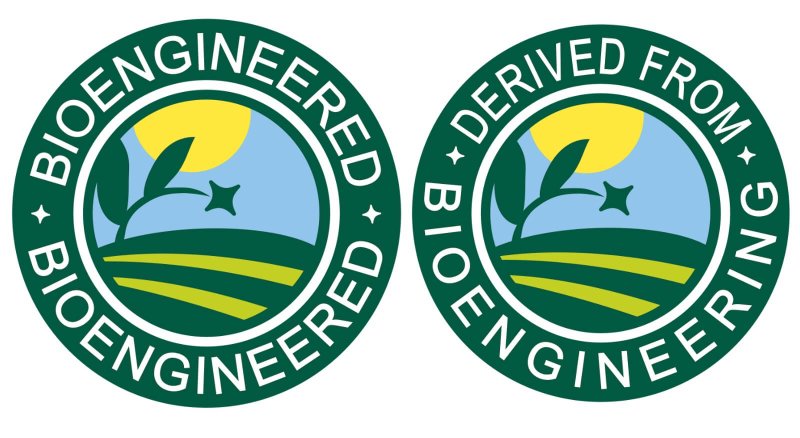
Label required by Jan. 1, 2022, on food products containing bioengineered products and byproducts. Credit: USDA.
(this post originally appeared on Genetic Literacy Project - January 4, 2022
The “bioengineered” label for foods sold in the United States is now in effect. Any food or food ingredient that has been genetically modified must include a label that says “bioengineered,” or come with a phone number or QR code guiding consumers to more information online.
On the positive side, the national labeling law avoids the nightmare of state-by-state requirements. The major negative is that the label could well become the target for negative campaigning and marketing around the fear-based, anti-GMO narrative and misleading “Non-GMO” labeling that have permeated food-related messaging for so long.
Fortunately there are some exciting “consumer-oriented” products finally becoming available which can display that newbioengineered label that would help consumers to overcome the disinformation and embrace technologies that actually improve our food system and our ability to enjoy it. The most notable are non-browning Arctic Apples, non-browning Innate potatoes and healthy, fast-growing, AquaBounty Salmon, which I wrote about two years ago in an article in Forbes and on Medium titled: “Three Foods I Wish I Could Buy at Costco.” These novel options that are not only tasty and healthy, but also have benefits in terms of sustainability, climate-smart farming, and food waste reduction.

I’ll discuss each example in detail below, but the big picture is that consumers in some locations are now able to find these products for sale, although they are not yet in national chains like Costco or Walmart, which for now are bowing activist pressures. Supplies are limited, but there is also a hesitancy on the part of many retailers who don’t want to be “first” to step into something potentially controversial. The truth is that there is no justification for such controversy since all the safety or environmental questions have already been addressed during the extraordinarily long and rigorous regulatory process overseen by the USDA, EPA and FDA. The farmers that grow major commodity crops have been able to take advantage of biotech crops for a long time, but consumers and specialty crop growers are only beginning to have that opportunity. Let’s see what that looks like.
Arctic Apples
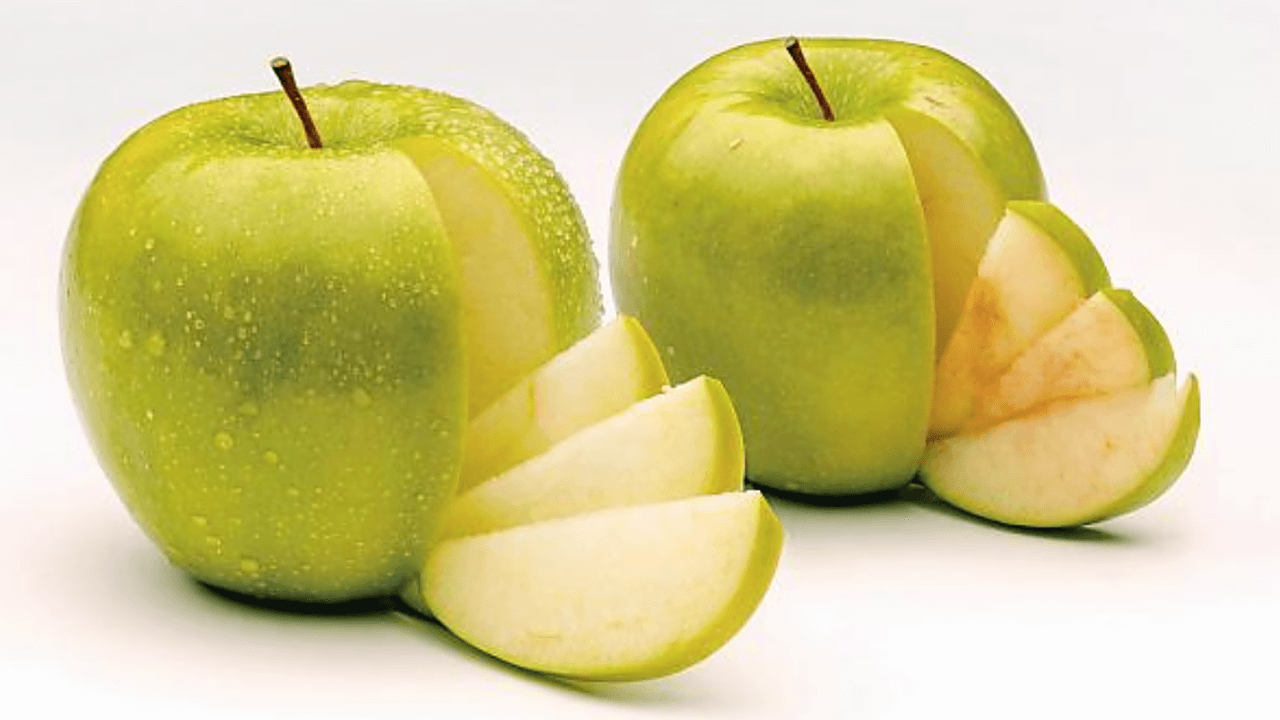
Twenty-five years ago a Canadian fruit grower named Neal Carter and his wife Louisa started a project to develop non-browning apples with the vision of reducing food waste and reversing the declining consumption of that healthy fruit. With a very small organization (e.g. less than 12), Okanagan Specialty Fruits Inc.(OSF) developed varieties of well known apple cultivars in which a gene for a particular enzyme was turned off or “silenced.” That enzyme is what turns the fruit brown when it is bruised or cut. Turning it off makes the fruit more robust in general and dramatically reduces the amount that is rejected from harvest through storage and processing. The other non-browning trait advantage is that Arctic apples can also be sold as a ready-to-eat, sliced product that retains the fruit’s full flavor, aroma and vitamin content.
OSF shipped me a box of these as whole apples a few years ago and I was able to take them to a potluck dinner a couple of hours after slicing and compare them with regular apples. Everyone who tried them thought they were great, wanted to be able to buy them, and didn’t worry at all about them being “GMO.” I think that will be a normative reaction once consumers can see biotech advantages first-hand instead of just hearing them demonized by notorious anti-technology groups and writers.
OSF was acquired in 2014 by Intrexon, a publiccompany where R.J. Kirk served as Chairman and CEO. As of 2020 ownership transferred to Third Security, LLC, a venture capital firm led by Kirk. Kirk encouraged a vertical integration business strategy focused on the sliced apple or “Fresh cut” market. Neal Carter continued to run the company as he still does today. Talking with him last week I was impressed by the scope of his expertise and understanding ranging from the growing the trees to the processing step, to nutritional information, food safety protocols, product distribution options, marketing and building of a solid public image. He also has a solid understanding of the science involved in the genetics of the Arctic® offering and how that technology has become ever more sophisticated over time.
OSF has purchased or leased 1300 acres of land for apple production land in Washington State where it currently grows 2.6 million trees. They have plans for additional orchards and their own dedicated slicing facility in the near future. Their apple variety options include Arctic Goldens, Arctic Grannys, and as of this year Arctic Fuji. Arctic Galas will be next. In the longer term, non-browning red skinned apples are on the list. They are also hoping to develop more robust, non-browning cherries that will avoid the stem decline or pitting that tends to occur with that delicious fruit.

OSF’s apples are now being sold asstand-alone slices or as a component of fruit mix products packaged in cooperation with companies providing the other ingredients. There is also a dried version which is special because the slices don’t require sulfur products to prevent browning while they were being dried. These products are increasingly available at some regional grocery retailers; at certain convenience store chains and food service outlets. Some is now provided through military procurement. In some geographies the sliced fruit is now available for home delivery from Amazon Fresh. The convenience store and home delivery options have become even more popular during the pandemic. In the long term these slices might be found at a Costco or other national chains, but this will require expanding orchard plantings that that is a relatively slow process (4-5 years from planting to achieve full productivity).
Overall, Arctic apples address many societal needs and desires: a positive olfactory experience (flavor, aroma, appearance, and texture), convenience, health benefits, food waste reduction, and efficient use of farmland and inputs.
Innate Potatoes
In the process of harvesting, cleaning, sorting and storage of potatoes, they can get bruised leading to black spots and browning inside the potato that makes them ugly and undesirable. This damage generates substantial waste all along the food chain from the packing house, to processors, to stores and through to the consumer. Black spots and browning are also very undesirable for making something like hash browns at home.
The Simplot potato company has been using biotechnology methods to “turn off” or “silence” a PPO gene that is similar to the one silenced in Arctic Apples. They have also turned off genes to reduce the amount of the amino acid asparagine in the potatoes that can turn into the naturally occurring compound acrylamide during frying. Acrylamide is linked to various health effects so having less is a nice outcome. These potatoes have been on the market since 2015 as “white russets” and were labeled as “bioengineered” even before the requirement to do so in 2022. This has not been controversial with the consumers who have had access to the product, mainly at regional grocery chains and restaurants, not in national chains like Costco, Safeway, Kroger, etc. Again this is partly because of retailer’ hesitancy to “be first,” but as the supply of these potatoes increases it will be interesting to see whether that picture can change
Simplot has other grower- and consumer-oriented potato improvements in the development pipeline. They have moved genes from wild potatoes to make their potato cultivars more resistant to late blight – a fungal disease that caused the Irish potato famine in the 19th century and which still requires substantial control efforts by potato farmers today. That trait is “cisgenic” or “intragenic” in that it is based on potato genes being used in potatoes.
Simplot also added these resistance genes to the potato cultivars typically grown in Bangladesh and Indonesia and provided them for free to those farmers. They are also working on resistance to a virus disease (Potato Virus Y) which has become a bigger issue for North American potato farmers since an insect called the potato psyllid has moved into the Northwest. That pest movement has likely enabled by climate change in that pest can now survive the warmer winters in that major growing region. Hopefully, the anti-technology voices won’t deprive the farmers of these pest resistance traits as they did successfully with the Colorado potato beetle resistance trait developed by Monsanto and first sold in 1997. Growers saw great benefit from those “NewLeaf Potatoes,” but the controversy led to their removal from the market in by 2001.
Simplot has future plans to use CRISPR on russet varieties and even extend them on smaller, non-Russet potatoes. They recently announced they are working with the strawberry breeding company, PSI to make various consumer-oriented options in that popular fruit crop using gene editing. Simplot has also received a CRISPR license to work on browning and bruising reduction for avocado! That could prevent a lot of food waste at the consumer level.
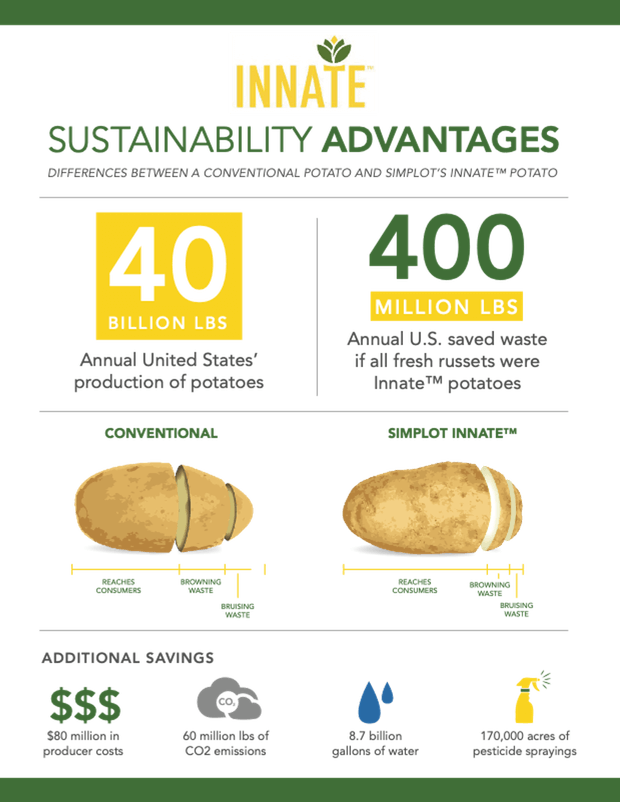
Overall the Simplot efforts address many positive societal benefits: food waste reduction, enhanced consumer experience, health benefits, farmer pest management and land-use-efficiency.
AquaBounty Salmon
The third food is a kind of Atlantic salmon that has been improved using biotechnology so that it can grow more rapidly and require less feed while still having the highly desirable nutritional content of other salmon (e.g. the heart-healthy omega-3 fats). The US imports ~400,000 metric tons of farmed Atlantic salmon each year, around 16% of the growing global demand (Norway, Chile, Canada and Scotland are the largest producers).
AquaBounty salmon are raised in bio-secure, re-circulating, terrestrial aquaculture systems (RAS) that return 95% of the water each day and remove any sludge for use as fertilizer on nearby farms. In the tanks the fish can be carefully monitored. They are also free from the parasites and pathogens found in the ocean so they don’t need antibiotics or vaccines. Another advantage is that they are not exposed to ocean pollutants like heavy metals or microplastics.AquaBounty salmon can be raised anywhere such a facility can be built – the first one is in near Muncie Indiana so the transport carbon footprint is minimized to many US markets vs international imports.
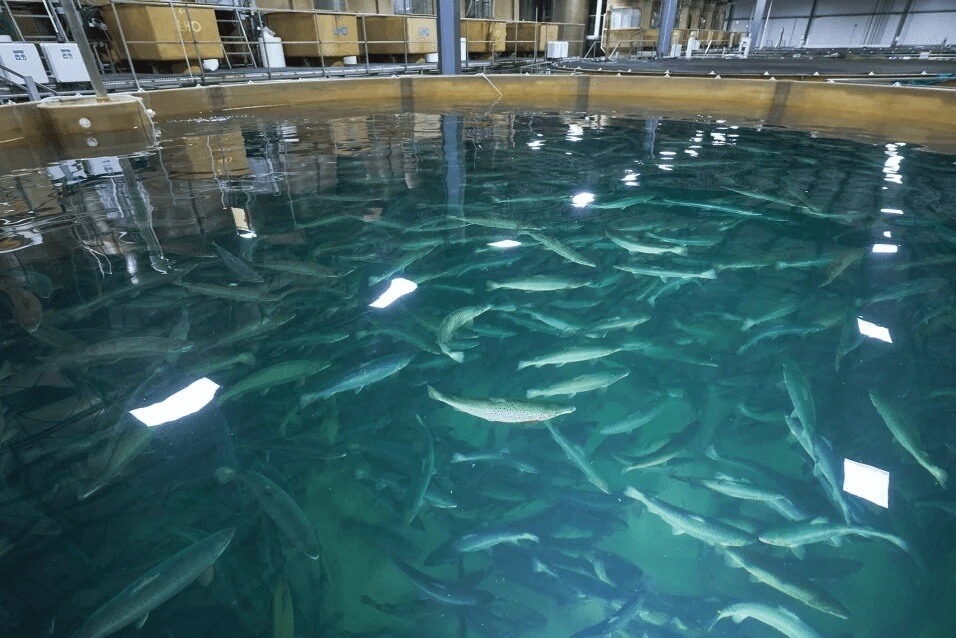
While this desirable fish option is now commercially available for some Americans and Canadians, it will take time to expand the number of production facilities sufficiently to serve national food retail chains like a Costco. Unfortunately my home state of California might never be on the list for local production. There is a state regulation against raising these “GMO” fish. There is no rational reason; it isn’t that there is danger of these fish getting loose in the Pacific Ocean (they are all sterile females and the tanks are secure). I’m still trying to trace the “logic” here, but ironically there is an exception in the state law for aquarium hobbyists to buy novelty “Glofish” that are genetically engineered to glow because they have DNA from jellyfish.
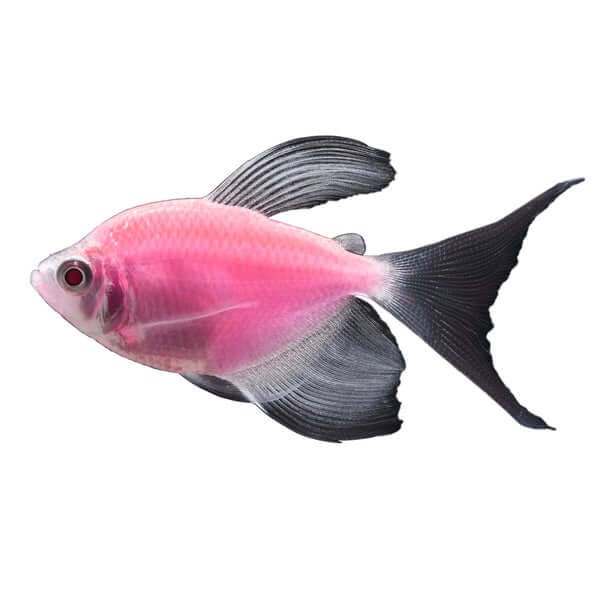
It makes no sense to allow anyone to buy cool“GMO” pets and not allow local production of one of the most resource efficient, environmentally friendly, safe, healthy and delicious food production options that will eventually be available to most regions.
What’s next?
If you want to know more about the label, and which foods or ingredients will be labeled as such, check out the USDA website and hear a good discussion featured in the first part of this podcast.
If you as a consumer are excited about these options and would like to see more innovative food products in the future, I would encourage you to seek them out in stores or on-line and to ask for them at your favorite retailers. Our best hope of overcoming the decades-long, fear-based campaigns against modern biotechnology is to finally “vote with our food dollars” and let our voice be heard through the comment boxes or websites that are available.


