Wednesday, March 21, 2012

Technology Will Not "Feed The World." Farmers Might


I've spent more than 30 years working in the agricultural technology sector.  I've written scores of blog posts defending it over the last three years.  That said, I don’t believe that "technologies" as such are going to feed the world.  Only farmers can possibly feed us as we face the epic challenge of doing so over the next few decades.  If farmers have great technology options, that can help both their productivity and environmental footprint; however, the burden falls on the farmers to integrate those technology options into a set of extremely complex and high-risk set management decisions.  Technology is just one component of their responsibility.

One often reads or hears assertions that "X" can or can’t "feed the world" (Organic, Conventional, GMO, Local...)   I think that all these statements miss an important point.  Anyone who farms on a commercial scale has to make scores of critical decisions each growing season.  There is no one suite of technologies or farming philosophies/rules that determine whether that farmer will be successful from either a food production point of view or an economic viability point of view.  A successful farmer will have integrated many interlinked choices about technology, practices, and timing.  These will have been based on monitoring of economic, climatic, and pest status.  They will involve numerous "bets" about the unpredictable course of those and other factors.  Farming is no business for the faint of heart.

Put Yourself In A Farmer’s Shoes

Think about the risks that an annual crop farmer takes.  They spend a good deal of money on their crops many months before it will be harvested and in many cases even longer before it will be sold.  They choose the seed variety to plant (many options in terms of traits, GMO and otherwise, suitability for their farm in terms of a host of adaptability).  They choose how to fertilize that crop, how to irrigate it if they have that option, how to manage its pest issues from before planting to in-season.  They have already had to decide whether to plant a winter cover crop.  They have had to decide about what sort of tillage system to use in and between crops (no-till, strip-till, conventional...).  They have to choose and maintain increasingly sophisticated equipment and they have the option to employ a whole range of “precision farming tools” and detailed databases about their farm.

All of this has to be done with only a limited ability to predict weather patterns and extreme events that can have a huge effect on the crop.  Farming is a high risk venture.  We all depend on farmers being willing to take those risks.

The Consumer Side

In America, and the West as a whole, we have been taught that “the customer is always right,” and that we are supposed to have any choice that we desire.  When it comes to food production, we can choose what we buy, but we don’t have a legitimate right to tell farmer what they can and can’t do based on our own urban sensitivities.  Farming is already a heavily-, and mostly well-regulated business.  If the USDA, EPA and FDA approve of a technology option, and if farmers find that it makes their job easier, less risky, or more profitable - who are we to begrudge them that opportunity?

Consider, for instance, the disparity between farmers and the broader population on the question of GMO crops.  Most farmers have been enthusiastic adopters of biotech crops where ever they are available in both the developed and developing world.  Many consumers remain wary of, and poorly informed about, the technology even after 16 years and billions of acres of cultivation without actual issues.

If people choose to reject science and regulators, it is certainly their option, but only for their own consumption.   A commenter on one of my posts recently said that he "should have a voice in how we produce our food."  Considering that the "we" was gratuitous, I said that while he should have a choice in what he buys, that cannot extend to the right to deny a farmer choices that fall within well-regulated norms.  We don't want to imitate the Europeans who have let politics trump their own scientific assessments.  There was a good recent post from a frustrated Portuguese farmer about this.

The vast majority of us depend on farmers, not just for survival, but also for the considerable pleasure and health benefits that are available at a remarkably affordable cost in modern society.  We would do well to appreciate the complex, risk-laden enterprise of the farming community, as well as their lack of leverage in the food system.  We should have more respect for their opinions.  
  
You are welcome to comment here and/or email me at savage.sd@gmail.com

no-till corn image from Indiana NRCS

Sunday, March 18, 2012

How I Helped Create A Superweed


This last week I've been engaged in blogosphere discussions about "Roundup Resistant Weeds," and other so-called "Superweeds."  Many people want to assign blame for this development. The truth is that many factors were involved and the adaptability of weeds has been and always will be a big challenge.  I should know:  I actually once helped to select for a "superweed!"  I did so in the process of trying to find a "greener" alternative for weed control.

My Move Into Biocontrol

In 1989 I joined a small company called Mycogen, that was in the business of developing biocontrol agents - living organisms that control pests.  I had been working in synthetic fungicide discovery at DuPont and felt very good about the sort of safe, new products we were developing, but I wanted to give biocontrol a try (it also didn't hurt that I would be living in San Diego instead of Delaware).

I joned the "bioherbicide" group, and our most interesting project involved a bacterium in the genus Xanthomonas that had been discovered by a researcher in the Midwest  It infected a weed called Annual Bluegrass (Poa annua,  or ABG for short.  See the photo at the top of this post)  ABG is a big problem in turf because it makes lots of unsightly seed heads, creates lighter green patches, and has a tendency to die from disease in the summer leaving bare patches.  Golf course and park managers hate it.  However, because this grass is closely related to other desirable grasses, it has always been difficult to find ways to control it in turf.

OK, we knew that if we solved this problem we weren't saving the world, but this was a great place to start in biocontrol.   If we could make a product work for this high value market, that would fund the needed research to improve ways to grow and stabilize live products in general.  Also, even though bacteria usually only infect plants through wounds, that was not going to be a problem because this Xanthomonas biocontrol was applied during the process of mowing the turf.  Its effects were quite dramatic in greenhouse tests.  As one of my technicians once described this to a visitor: "this grass is not only merely dead, it's most sincerely dead."

Hurdles to Pass

Before we could field-test this "bioherbicide" option, we had to demonstrate to the USDA that this pathogen didn't just occur in the Midwest, and that it wouldn't kill any desirable plants.  I also got to go to Japan to help our partner company find isolates there as well.  That essentially meant touring lots of famous shrines and gardens while furtively reaching down and pulling up ABG plants and stuffing them in baggies to take back to the lab.  We had to learn to grow substantial volumes of the bacteria and how to keep them alive at least long enough to take to the field to test.  We had to test our bacteria in small plots of planted ABG to determine what rate was needed.  Once all that was done we were finally ready to try using this in the real world.

Early Success

At first our experiments on actual golf courses, etc. were pretty exciting.  A week or so after the bacteria were applied, the ABG plants began to wilt.  It happened slowly enough that the desired grass had time to fill-in, and the area nicely transitioned from a splotchy, weedy mess to a nice, uniform turf.  We had lots of work left to do on stabilization before this new "bioherbicide" could be commercialized, but we had already started generating quite a bit of interest in the turf management community and elsewhere  (VP candidate Dan Quayle came to visit Mycogen during this period - we were just that cool - lol).


Problems Arise

Soon, however, there was a problem.   We started finding that some of the ABG plants in our plots didn't wilt.  They looked just fine.  We collected seed and took it back to the lab.  It turned out that there was a "bio-type" of ABG which was not susceptible to this pathogen.  It was a "perennial biotype" of "annual" bluegrass (I know that sounds dumb for something named "annual", but instead of dying after going to seed like the annual type, this strain kept growing via rhizomes).  Our bioherbicide was simply selecting for those tolerant types.  We had selected for a "superweed" (in modern parlance).

This phenomenon turned out to be common for biocontrol agents.  Their beauty is that they can be super specific and thus safe to non-target plants and everything else.  Their downside is that populations of things like weeds almost always involve a wide mix of genotypes, and so our nice, "green," biocontrol agent selected for tolerance far faster than any synthetic herbicide.

Was This Really A Superweed?

Is it fair to call our Poa annua nemesis a "superweed?"  Actually that term is greatly over-used.  How "super" the weed is depends more on its original biology than on how it was selected (by a regular herbicide, by a herbicide used on a tolerant crop, by a biological agent...).  The most troublesome weeds are those that make a great deal of seed quickly, that emerge over a wide window, that have ways to spread seed, and which are highly competitive with the crop.  ABG has all those characteristics and that is part of why you can find it just about anywhere.  The resistant lines that we had "created" by spraying out bacterium were no worse than the original.  They were just resistant to our bioherbicide. The same is true with weeds that have become resistant to Roundup or to a host of other herbicides.  The reason some of the current resistant weeds are important is that they grow in important food crops.  The US has something like 50 million acres of managed turf, but that isn't feeding anyone except some rabbits.  So, the "superness"  of weeds isn't  a function of whether they are related to GMO crops, it comes down to their fundamental biology.  Also, to be accurate no one "creates" a super weed.  We just select for something that natural biological processes have generated.


So that's how I helped select for a superweed.  This technology was not commercialized because the weeds had already beat us.  It is poetic irony that annual bluegrass is a huge issue in my own lawn and garden. (See the lighter colored areas in my mixed clover and tall fescue lawn.)

Oh, by the way, I still keep up with the status of the biocontrol industry since I left it in 1996.  They are definitely making some good progress, but its still a very small part of how we control pests.  That's OK, we need all the tools we can find.

You are welcome to comment here and/or email me at savage.sd@gmail.com

Saturday, March 10, 2012

A Sincere Reply to an Anti-GMO Commenter

I often post on the volunteer driven site, Biofortified.  What I appreciate about this site is that it is independent of any commercial interest and that it is run by the next generation of agricultural scientists relative to me.  It is one of the few places on the internet where there is a vigorous, many-sided discussion of GMO technology.  There is a sincere anti-GMO commenter on this site who has commented and re-commented on my most recent post on Biofortified. 
I have no idea who Tore is, but I made this effort to communicate with him/her person to person.  

Tore, I’ve lost track of the thread for your last comment, but I’d like to reply in general.
I can tell that you have a great deal of passion about your opposition to GMO. I respect your passion and I respect the need for skeptics for any enterprise. I’m 57 so I grew up in the generation that more or less invented distrust of the establishment (at least we thought we did). I get the need for hard questions.
Though I have never done any plant genetic engineering myself and have only been connected to that effort through lab colleagues or consulting clients, I have had the privilege of knowing many of these people on a person-to-person basis, some of the people who have made this happen over the last 40 year. I wish that you could know them – from academia, from commercial companies, from regulatory agencies. There is a human side to this whole deal that few people will ever know. There was, and still is among this community, an idealism behind all of this that transcends the economic drivers.
One thing that I appreciate about the Biofortified site is that it is managed and driven by the next generation of scientists who are involved in plant biotechnology. I certainly appreciate the fact that they let “old guys” like me contribute, but I particularly appreciate their new perspective on this science. Frankly, molecular biology as a field has been moving so fast that it is hard for folks like me to keep up.
I sometimes wonder if there needs to be a “statue of limitations” on saying that “the sky is falling” when it comes to GMO crops. We are into this 16 years and billions of planted and harvested acres. I do feel like the scientific community (public and private) did its very best to anticipate any downsides. I fully acknowledge that scientists can’t anticipate every possible negative outcome, but in this case it seems like they did a pretty good job.
Tore, I don’t want to diminish the heart behind your concerns. I also don’t want to pretend that GMO technology is all that is needed to feed the world. Actually only farmers will ever feed the world because they are the ones that have to integrate that option among the scores of critical decisions they have to make every growing season. In some cases, farmers will have GMO options in their “tool box” and I think that is a good, and well reviewed potential choice. I think that as dependent we all are on their risk-laden careers, we should respect their choice of GMO crops when they are available

Friday, March 9, 2012

Misuse of A Vietnam Era Tragedy


(Originally posted on Biofortified, 3/9/12)
Mark Twain once said, "A lie can travel half way around the world while the truth is putting on its shoes."  There was a perfect example of that last week.  The Center for Food Safety (CFFS) spread the term, "Agent Orange Corn" for Dow AgroSciences' new biotech corn hybrids that are working their way through the regulatory process.   These hybrids have been modified to be more resistant to 2,4-D, an herbicide that was introduced in 1948.  This is being cast as a return to the use of Agent Orange and that is completely untrue.  There is a lot of interesting detail behind this, but the CFFS moniker for the corn is a classic case of information twisting - twisting in a way that is intentionally misleading.  The reason that the term "Agent Orange Corn" is inaccurate can be discovered in a 1-minute Wikipedia search, but this did not prevent a host of of bloggers,environmental and Organic organizations, and even "news outlets" from uncritically passing along the disinformation.

The Link Between This New Corn Trait and Agent Orange

Agent Orange, a defoliant used in the Vietnam War, was made with two herbicides:  2,4-D (the one that the new corn tolerates), and 2,4,5-T.  The 2,4,5-T was unknowingly contaminated with a dioxin, something that was only later recognized as a significant human safety issue.  Yes, 2,4-D was part of Agent Orange, but it wasn't what made Agent Orange a danger back in the 1960s.  In fact, for decades, 2,4-D has continued to be one of the most widely used, safest herbicides in the world.  It is registered in 70 countries, including those with very comprehensive and cautious regulators (Canada, the UK, Germany, France, Japan...). 2, 4 D is a component of most consumer products for the control of weeds in lawns.  It is used extensively in wheat.  It can already be used on corn up to a certain growth stage.  2,4-D is NOT Agent Orange.

I'ts Not The 1960s (that is a good thing!)

There was a very limited understanding of environmental  toxicology in America in the early 1960s.  The modern environmental movement was just beginning, and the Environmental Protection Agency (EPA) was not established until 1968.  So during the early 1960s,  terrible mistakes were made with Agent Orange that are completely unthinkable today.  Since that time the scrutiny of new and old pesticides has become comprehensive.  It would be virtually impossible for an Agent Orange-like mistake could occur today, but that is what CFFS and its repeaters are implying.

Why is 2,4-D Still Around?

A great many of the pesticides that were in use in the early 1960s have long since been banned or progressively replaced with far, far safer alternatives.  A few, like 2,4-D, have continued to pass safety standards as they have been intensively reviewed and re-reviewed over the decades of increasingly sophisticated analysis.  2,4-D has been scrutinized and challenged from both a toxicological and epidemiological perspective.  In every round of risk assessment, the EPA and its outside experts have concluded that 2,4-D has meets the EPA's, ever more cautious, standards.

Why Would Farmer's Want This New Corn?

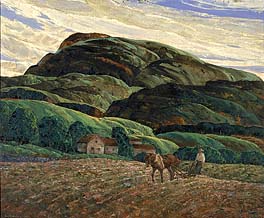
Farmers in the US and elsewhere have been moving increasingly towards the control of weeds with herbicides rather than with mechanical methods called "tillage."  This is actually an extremely good thing from an environmental point of view.  An image like that by Leo Breslau below looks romantic, but it actually represents an environmental disaster.

Plowed and tilled soils are susceptible to erosion.  Erosion carries not just sediments, but also fertilizers and pesticide residues into streams.  The mechanical disturbance of soil degrades its properties over time so that it becomes less able to capture and store rain and less able to sequester nutrients.  This sort of farming "worked" in many cases only because there was more "virgin land" to start plowing.  Beginning in 1960, some farmers began to experiment with "no-till" farming methods on a commercial scale.  One of the reasons they were able to do that was because herbicides like 2,4-D had become available.  Since the development of herbicide tolerant crops in 1996, the rate of conversion to no-till farming has been accelerating. From an environmental point of view, expansion of no-till farming  is highly desirable, especially if  combined with some other key practices. For farmers to successfully implement no-till farming; however, there must be a range of effective herbicide options.

Resistant Weeds

When any one herbicide is used too much, some weeds can become resistant.  As many experts predicted, this has begun to happen for glyphosate tolerance (Roundup Ready).  The selection for herbicide tolerant weeds is not something new with biotech crops.  It is a problem that has occurred many times, long before GMO crops.  They key is to employ multiple options including herbicides with different "modes of action," cultural methods like cover crops or planting date shifts, and in some cases the judicious use of tillage.   Recently, some weed scientists have highlighted the need for more sophisticated and varied weed control strategies.   The new corn and soybean types that are coming can be a part of that strategy if employed strategically.  The alternative of returning to mainly mechanical weed control is not an acceptable scenario.
Groups like the Center For Food Safety have generated furor by shouting an intentionally sensational half-truth.  Ironically, this has put them in the position of advocating against a tool farmers need for environmentally sustainable farming.  This new corn, and the soybeans that will follow, are part of what will enable land-use efficient, low environmental footprint farming. They have nothing to do with a 50 year old defoliant. There is absolutely no doubt that the lessons from "Agent Orange" must be remembered.  The innocent victims of Agent Orange deserve that heightened awareness.  What they don't deserve is to have their tragedy exploited in an irresponsible way.
The "Comment Period" at the USDA about this particular corn technology has been extended until April 27th.  The CFFS and its allies are mobilizing people to enter comments.  There is a need for counter-balancing arguments from those that understand the importance of technology in agriculture.  Here is where to comment (USDA BRS Comments) before the extended deadline of 4/27/12.

You are welcome to comment here and/or to email me at savage.sd@gmail.com
Vietnam spraying image from Wikipedia
Leo Breslau "Plowing" image from the Smithsonian

Thursday, March 8, 2012

Where Are Global Food Prices Headed?


As I have continued to track the second "spike" in the FAO Global Food Price Index, I've become convinced that we have to look at it in terms of long-term trends, not the monthly ups and downs that are so often the focus of discussion.  Putting the data in 3-year windows is helpful, and as it appeared last month, the current "spike" looks like it is returning to an upward trend after only a very modest decline at the end of 2011.  In the graph above, the data available through February of 2012 (released today, 3/8/12) is shown in red.  If the the index follows the average 4.18 point/month gain seen over the same period in 2009, then the index could conceivably break 260 by year's end.

In my field of Plant Pathology, we use a tool called "the area under the disease progress curve" as a way compare plant disease epidemics.  I think the same approach could be useful to compare food price trends because the impact, particularly on poor and import dependent countries, is something that is felt over time. The graph below is based on the sum of monthly FAO Index values for the designated 3-year windows.  Using the same extrapolation as for the blue line above I've made an estimate of what this latest "spike" could mean in comparison to other historical periods.


Hopefully it won't be that bad, but the point is that to compare these spikes, it is important to do more than to simply look at maxima and minima.

It is important not to over-interpret this one particular measure of the global food system, but I do think that it suggests that we are in a new chapter of food supply history in terms of the system to be able to respond to high prices through production gains.  I'm sure it is complex, but one small example is the fact that supplies of elite corn hybrids for the 2012 planting season in the US will be less than ideal because of weather-related problems with seed production.  That is not normal.


The next update is scheduled for April 5th.
You are welcome to comment here or to email me at savage.sd@gmail.com.  I would also be happy to share these graphs in PowerPoint form to anyone interested.

Wednesday, February 22, 2012

What Should We Know About Foreign Genes In Our Food?

(Originally Posted on Biofortified 2/22/12)
In a recent email exchange about the merits of mandatory "GMO labeling," I was asked this question: "Why shouldn't we be able to know what foreign genes are in our food?"  It seems like a reasonable question to most people.  After all, we are the customers; don't we have a right to know what we want to know? The answer to that question is actually a lot more complicated than you might think. Let me explain. What some people find "creepy" about the idea of "GMO crops" is that they contain genes from organisms other than the crop itself - hence the emotive term, foreign genes. Practical speaking, the novel genes in the commercial biotech crops grown around the world have come from either bacteria or viruses. To your average person, that might still sound creepy, but it needs to be put into perspective.  Most people may not know it, but our diet is, and always has beenloaded with foreign genes from bacteria and viruses and other living organisms (yeast, other fungi, nematodes, algae...). We don't live in a sterile world.  In fact there are a host of microbes whose natural role in the world is to grow in association with plants - including food crops.   Except for the case of recently cooked food, these organisms tend to be alive and well when we eat them - genes and all.  I'll give a quick survey of the microbes which one finds on plants and whose foreign genes genes we regularly consume.

Plant Surface Dwellers Above Ground

The surfaces of all plants, including those used for food, support a rich and diverse community of micro-organisms. Those living on leaves and other above-ground parts of plants make up the Phyllosphere Community (see image above).  These organisms live on the nutrients available on the plant’s surface, and they thrive in the tiny "boundary layer" of humid air that comes from the water inside the plant. There can easily be between one million and one hundred million microbial cells on every square centimeter of plant surface. In a salad you are ingesting microbes numbering in the billions. Washing produce only slightly reduces those numbers, and they can reproduce again given a little time.  Leaves, stems and fruits are loaded with foreign genes from these residents.

Plant Surface Dwellers Below Ground

There are also richly diverse communities of microbes that live in association with below ground portions of plants (roots, tubers...). These are called "Rhizosphere inhabitants."  Many live in a very close and sometimes even helpful relationship with the plant - protecting its roots from disease causing organisms, helping the plant absorb nutrients, or even supplying certain plants with supplies of usable nitrogen.  Some are also just free loaders and some are microbes that cause diseases. The numbers of organisms here are even higher than on the above ground plant surface, and we can only grow and study a small fraction of these microbes in the lab. Some of these common soil bacteria (strains of Bacillus thuringiensis) are the source for the Bt genes in insect resistant GMO crops (corn, cotton, sweet corn).  Another common soil bacterium (Agrobacterium) is the source of the EPSPS gene in most "Roundup Ready" plants.  Both of these organisms (and all their genes) have always been present on foods that grow in and near the soil.

Microbes and Their Genes Inside of Plants

The inside of a plant is also far from sterile.  There are microbes know as "endophytes" which thrive inside of plants, particularly in the "plumbing" of xylem and phloem.  Some cause diseases of the plant (Fusarium, Verticillium), but many are another class of freeloaders that cause no harm or in a few cases provide a benefit to the plant.  In any case, they and their genes are common elements of our food.

Would You Like Any Viruses With Your Bacteria?

Oh, by the way, our food also carries along lots of genes from viruses (phages) that infect the bacteria that grow on and in it. Many plants are themselves infected with plant viruses (mostly RNA viruses but also some DNA viruses).  Any crop in the crucifer family (turnips, broccoli, cabbage...) can be infected with Cauliflower Mosaic virus - a DNA plant virus which is the source of the "promoter" sequence used in many GMO crops. Viruses have only a handful of genes, but they can exist in huge numbers in an infected plant. Farmers try to avoid having plant viruses in their crops because they can be damaging. Even so, there are mild strains that are tolerated in some crops. Viral genes are certainly a regular part of our diet. There are also things called transposons which are natural sequences of foreign DNA that hop in and out of the plant's chromosomes sometimes disrupting working plant genes.

But Isn't That Different?  Aren't Those Just "Natural, Foreign Genes"?

Yes and no.  The way that plants are cultivated has a big influence on the particular dynamics of microbial associations with the crop above and below ground.  Everything from the way the crop is fertilized or irrigated to the microclimate associated with planting density, trellising etc will change the mix of microbes in play.  For instance, the pesticides or foliar trace nutrients that are sprayed on the crop effect its microbial suite.  There are also quite a few biological control products which comprise live or dead bacteria which are quite intentionally sprayed on a crop in huge numbers to express some of their genes in a way which wards off a disease or insect. These are celebrated as biological pesticide alternatives to synthetic pesticides. For more than 50 years we've been spraying crops with the same sort of Bt protein that is in a biotech insect resistant plant, but the sprayed form includes the bacterium, its other genes and all its other gene products. There are also viruses that infect insects (Baculoviruses) that are intentionally sprayed on certain crops. When compost is used on an organic or conventional field, one of the express purposes is to bring along a huge and diverse population of microbes. These microbes, and their genes, will then be in abundant supply on the roots, leaves and fruit. These may well be "natural" organisms, but there is no natural system in which such huge amounts of such material and associated bacteria etc. are introduced to a plant community. So, human activity has a profound effect on the range and quantity of foreign genes on and in our food.  If it is logical to label genetically modified foods which contain a few foreign genes via genetic engineering, wouldn't it also make sense to label foods that have been intentionally sprayed with a biocontrol product or grown in a compost enhanced soil? Those contain far more foreign genes.

Should Any Of This Be Scary?

Not everything that can be made to sound scary is actually scary. Even though we are eating microbes, their genes, and their gene products on a grand scale, it is almost never a problem. In fact, some of these microbes go on to become part of our own bank of bacteria etc. that live within our digestive system - often to our benefit. Indeed, we eat many foods that are intentionally loaded with microbes: like the ones that convert milk to yogurt or cheese or seaweed to Nato.  This is all just part of our natural food supply. It is a very rare occasion when our incidental bacterial or viral feast includes something that poses a serious threat (certain strains of Salmonella, E.coli, Lysteria...that are actual human pathogens).  Generally speaking, the consumption of foreign microbes, foreign genes, and the products of foreign genes is an unavoidable, but still non-issue from a safety point of view.

How Does This Compare To A GMO Crop?

The biggest difference between the foreign genes in GMO crops and the foreign genes that find their way into food by other mechanisms is that the GMO genes are much more of a known entity.  Unlike the cocktail of microbes that come along in an uncontrolled, unknown, and almost unknowable way with all food, the microbial genes and gene products in a GMO crop are very well understood. We know the exact sequence of the gene, its location in the plant's chromosomes, what the gene does. We know which proteins are made because of that gene and we have been able to study those proteins in detail to determine their safety. With most of the other microbial genes that we are eating we can't say with certainty what is there, how much is there and what all the possible gene products are or what they do. Theforeign genes in GMO crops are different from all the other foreign genes mainly in that we know so much more about them.  So in reality, the genes in a GMO crop are the least creepy of such elements in our food.

Electron micrograph of bacteria on a bean leaf from Iowa State University
You are welcome to comment here and/or to email me at savage.sd@gmail.com.
An index of my blog posts can be found here.

Friday, February 10, 2012

Global Food Situation: This Does Not Look Good


I don't want to be an alarmist, but there seems to be something happening with global food prices that is historically unprecedented and not encouraging. The FAO (Food and Agriculture Organization of the UN) puts out a monthly index of global food prices - essentially an estimate of prices in international trade (see graph above).  After remaining relatively stable for decades, there was a sharp spike in prices in 2007/8.  In that period there were food riots in many countries where the population is highly dependent on imports and where they spend a large percentage of their family budget on food.  That peak ended abruptly by 2009 as farmers around the world responded to the high prices and produced more.  However, in late 2010 another spike occurred.  That one has been receding since mid 2011; however, the retreat was much slower than the previous cycle.  In January estimates released on 2/9/12, the combined index and its components have once again begun to rise. 

Some of the articles written about this describe it only as a rise after a 6 month decline.  What that analysis misses is the disturbing fact that the decline did not even come close to returning to the previous baseline.  This is easier to see by overlaying the data for the last 12 years in three year "cycles." (see graph below)


What we see is that between 2001 and 2003, and between 2004 and 2006, the Food Price Index rose by something like 10 points or just a few points/year.  The 2007-9 period involved the big spike, but returned to a fairly "normal" trajectory by the middle of the third year.  However, by the end of 2009, the index more than 50 points over what it was when this cycle began in 2007.  For the 2010-12 cycle, the index now seems to be on the rise and is already 50 points over where it began.  By the end of this year it could easily be far higher.  It is possible that the January rise is a blip, but it could also be additional evidence of an acceleration in the basic rise of food prices.  We will have to see what happens.

Farmers are certainly still responding to higher prices by trying to produce more, but frequently the weather works against them.  Some of this is also related to government actions like export bans.  Many have cited a role for commodities speculators as well.  That this is a complex issue is a given.  In any case, this does not bode well for the world's poor.

You are welcome to comment here or to email me at savage.sd@gmail.com.  There is an index with links to all my blog posts here.


s