Showing posts with label anti-GMO. Show all posts

Thursday, January 20, 2022

Salmon, apples and potatoes — 3 healthy and sustainable foods that you can buy now under the new “bioengineered” label

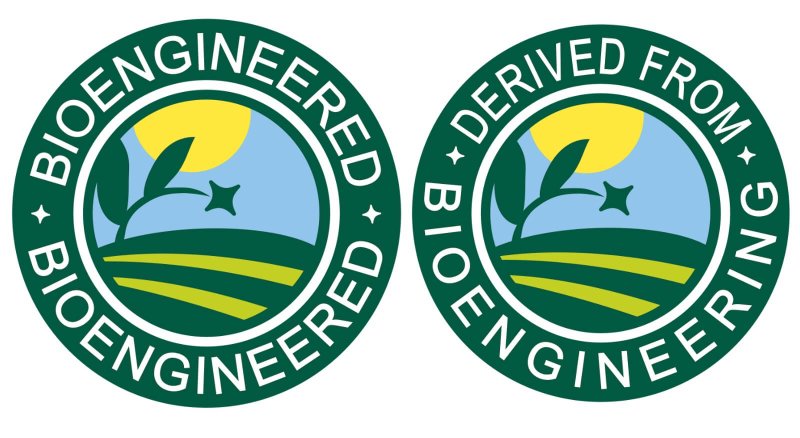
Label required by Jan. 1, 2022, on food products containing bioengineered products and byproducts. Credit: USDA.

Label required by Jan. 1, 2022, on food products containing bioengineered products and byproducts. Credit: USDA.

(this post originally appeared on Genetic Literacy Project - January 4, 2022

The “bioengineered” label for foods sold in the United States is now in effect. Any food or food ingredient that has been genetically modified must include a label that says “bioengineered,” or come with a phone number or QR code guiding consumers to more information online.

On the positive side, the national labeling law avoids the nightmare of state-by-state requirements. The major negative is that the label could well become the target for negative campaigning and marketing around the fear-based, anti-GMO narrative and misleading “Non-GMO” labeling that have permeated food-related messaging for so long.

Fortunately there are some exciting “consumer-oriented” products finally becoming available which can display that newbioengineered label that would help consumers to overcome the disinformation and embrace technologies that actually improve our food system and our ability to enjoy it. The most notable are non-browning Arctic Apples, non-browning Innate potatoes and healthy, fast-growing, AquaBounty Salmon, which I wrote about two years ago in an article in Forbes and on Medium titled: “Three Foods I Wish I Could Buy at Costco.” These novel options that are not only tasty and healthy, but also have benefits in terms of sustainability, climate-smart farming, and food waste reduction.

I’ll discuss each example in detail below, but the big picture is that consumers in some locations are now able to find these products for sale, although they are not yet in national chains like Costco or Walmart, which for now are bowing activist pressures. Supplies are limited, but there is also a hesitancy on the part of many retailers who don’t want to be “first” to step into something potentially controversial. The truth is that there is no justification for such controversy since all the safety or environmental questions have already been addressed during the extraordinarily long and rigorous regulatory process overseen by the USDA, EPA and FDA. The farmers that grow major commodity crops have been able to take advantage of biotech crops for a long time, but consumers and specialty crop growers are only beginning to have that opportunity. Let’s see what that looks like.

Arctic Apples
iuwbevw sgn itvuvgnd

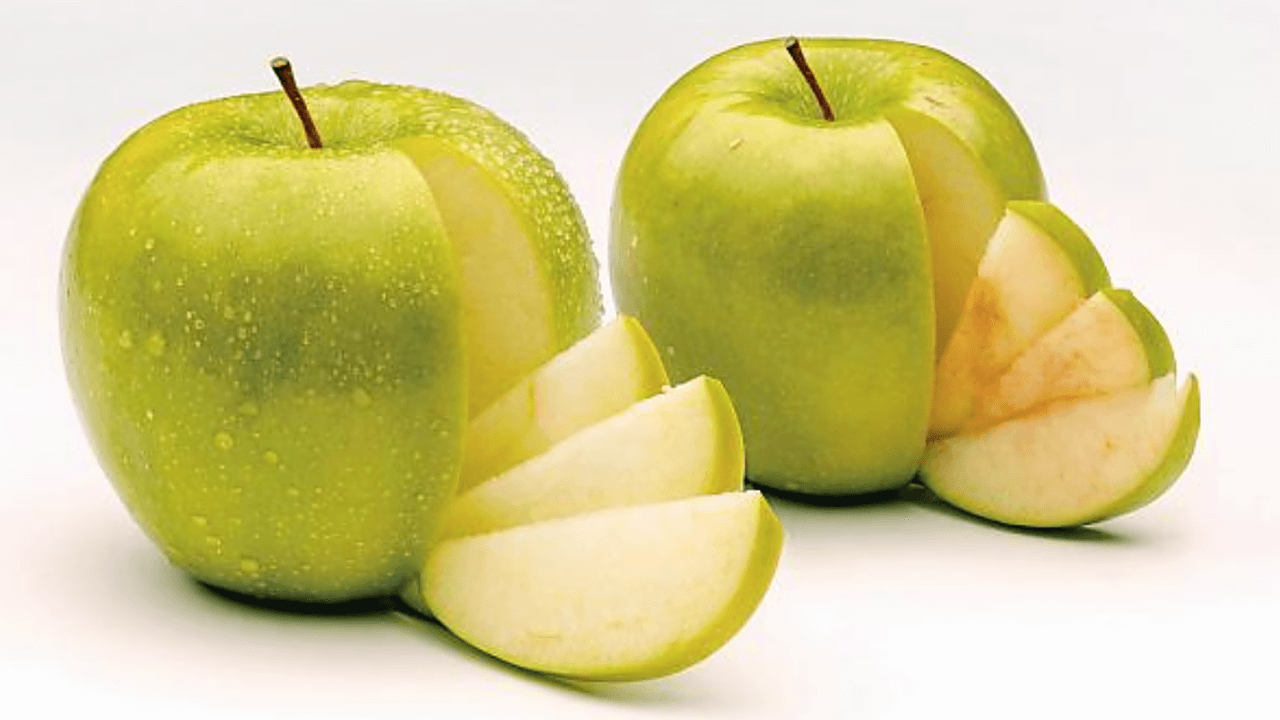
Twenty-five years ago a Canadian fruit grower named Neal Carter and his wife Louisa started a project to develop non-browning apples with the vision of reducing food waste and reversing the declining consumption of that healthy fruit. With a very small organization (e.g. less than 12), Okanagan Specialty Fruits Inc.(OSF) developed varieties of well known apple cultivars in which a gene for a particular enzyme was turned off or “silenced.” That enzyme is what turns the fruit brown when it is bruised or cut. Turning it off makes the fruit more robust in general and dramatically reduces the amount that is rejected from harvest through storage and processing. The other non-browning trait advantage is that Arctic apples can also be sold as a ready-to-eat, sliced product that retains the fruit’s full flavor, aroma and vitamin content.

OSF shipped me a box of these as whole apples a few years ago and I was able to take them to a potluck dinner a couple of hours after slicing and compare them with regular apples. Everyone who tried them thought they were great, wanted to be able to buy them, and didn’t worry at all about them being “GMO.” I think that will be a normative reaction once consumers can see biotech advantages first-hand instead of just hearing them demonized by notorious anti-technology groups and writers.

OSF was acquired in 2014 by Intrexon, a publiccompany where R.J. Kirk served as Chairman and CEO. As of 2020 ownership transferred to Third Security, LLC, a venture capital firm led by Kirk. Kirk encouraged a vertical integration business strategy focused on the sliced apple or “Fresh cut” market. Neal Carter continued to run the company as he still does today. Talking with him last week I was impressed by the scope of his expertise and understanding ranging from the growing the trees to the processing step, to nutritional information, food safety protocols, product distribution options, marketing and building of a solid public image. He also has a solid understanding of the science involved in the genetics of the Arctic® offering and how that technology has become ever more sophisticated over time.

OSF has purchased or leased 1300 acres of land for apple production land in Washington State where it currently grows 2.6 million trees. They have plans for additional orchards and their own dedicated slicing facility in the near future. Their apple variety options include Arctic Goldens, Arctic Grannys, and as of this year Arctic Fuji. Arctic Galas will be next. In the longer term, non-browning red skinned apples are on the list. They are also hoping to develop more robust, non-browning cherries that will avoid the stem decline or pitting that tends to occur with that delicious fruit.

Credit: Articapples.com

OSF’s apples are now being sold asstand-alone slices or as a component of fruit mix products packaged in cooperation with companies providing the other ingredients. There is also a dried version which is special because the slices don’t require sulfur products to prevent browning while they were being dried. These products are increasingly available at some regional grocery retailers; at certain convenience store chains and food service outlets. Some is now provided through military procurement. In some geographies the sliced fruit is now available for home delivery from Amazon Fresh. The convenience store and home delivery options have become even more popular during the pandemic. In the long term these slices might be found at a Costco or other national chains, but this will require expanding orchard plantings that that is a relatively slow process (4-5 years from planting to achieve full productivity).

Overall, Arctic apples address many societal needs and desires: a positive olfactory experience (flavor, aroma, appearance, and texture), convenience, health benefits, food waste reduction, and efficient use of farmland and inputs.

Innate Potatoes

In the process of harvesting, cleaning, sorting and storage of potatoes, they can get bruised leading to black spots and browning inside the potato that makes them ugly and undesirable. This damage generates substantial waste all along the food chain from the packing house, to processors, to stores and through to the consumer. Black spots and browning are also very undesirable for making something like hash browns at home.

The Simplot potato company has been using biotechnology methods to “turn off” or “silence” a PPO gene that is similar to the one silenced in Arctic Apples. They have also turned off genes to reduce the amount of the amino acid asparagine in the potatoes that can turn into the naturally occurring compound acrylamide during frying. Acrylamide is linked to various health effects so having less is a nice outcome. These potatoes have been on the market since 2015 as “white russets” and were labeled as “bioengineered” even before the requirement to do so in 2022. This has not been controversial with the consumers who have had access to the product, mainly at regional grocery chains and restaurants, not in national chains like Costco, Safeway, Kroger, etc. Again this is partly because of retailer’ hesitancy to “be first,” but as the supply of these potatoes increases it will be interesting to see whether that picture can change

Simplot has other grower- and consumer-oriented potato improvements in the development pipeline. They have moved genes from wild potatoes to make their potato cultivars more resistant to late blight – a fungal disease that caused the Irish potato famine in the 19th century and which still requires substantial control efforts by potato farmers today. That trait is “cisgenic” or “intragenic” in that it is based on potato genes being used in potatoes.

Simplot also added these resistance genes to the potato cultivars typically grown in Bangladesh and Indonesia and provided them for free to those farmers. They are also working on resistance to a virus disease (Potato Virus Y) which has become a bigger issue for North American potato farmers since an insect called the potato psyllid has moved into the Northwest. That pest movement has likely enabled by climate change in that pest can now survive the warmer winters in that major growing region. Hopefully, the anti-technology voices won’t deprive the farmers of these pest resistance traits as they did successfully with the Colorado potato beetle resistance trait developed by Monsanto and first sold in 1997. Growers saw great benefit from those “NewLeaf Potatoes,” but the controversy led to their removal from the market in by 2001.

Simplot has future plans to use CRISPR on russet varieties and even extend them on smaller, non-Russet potatoes. They recently announced they are working with the strawberry breeding company, PSI to make various consumer-oriented options in that popular fruit crop using gene editing. Simplot has also received a CRISPR license to work on browning and bruising reduction for avocado! That could prevent a lot of food waste at the consumer level.
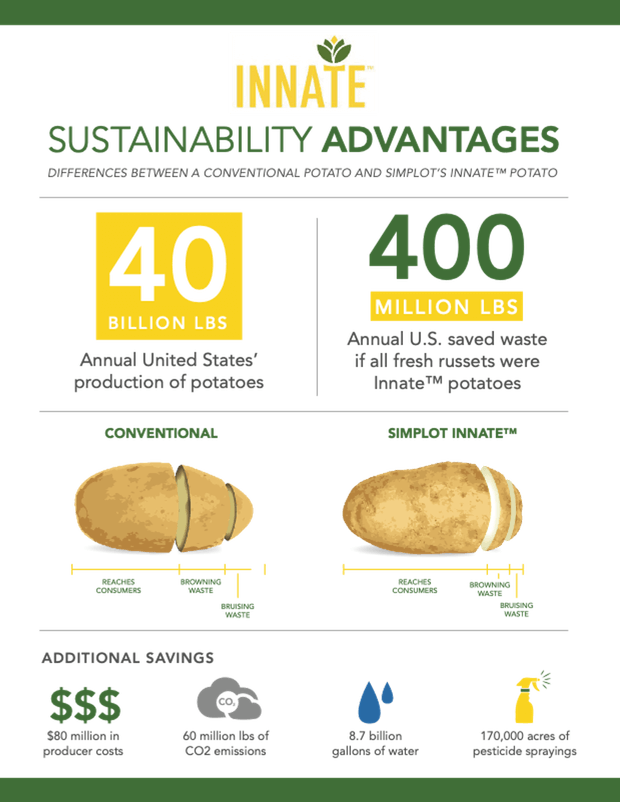
The many sustainability advantages of Innate non-browning potatoes. Credit: Simplot Biosciences

Overall the Simplot efforts address many positive societal benefits: food waste reduction, enhanced consumer experience, health benefits, farmer pest management and land-use-efficiency.

AquaBounty Salmon

The third food is a kind of Atlantic salmon that has been improved using biotechnology so that it can grow more rapidly and require less feed while still having the highly desirable nutritional content of other salmon (e.g. the heart-healthy omega-3 fats). The US imports ~400,000 metric tons of farmed Atlantic salmon each year, around 16% of the growing global demand (Norway, Chile, Canada and Scotland are the largest producers).

AquaBounty salmon are raised in bio-secure, re-circulating, terrestrial aquaculture systems (RAS) that return 95% of the water each day and remove any sludge for use as fertilizer on nearby farms. In the tanks the fish can be carefully monitored. They are also free from the parasites and pathogens found in the ocean so they don’t need antibiotics or vaccines. Another advantage is that they are not exposed to ocean pollutants like heavy metals or microplastics.AquaBounty salmon can be raised anywhere such a facility can be built – the first one is in near Muncie Indiana so the transport carbon footprint is minimized to many US markets vs international imports.
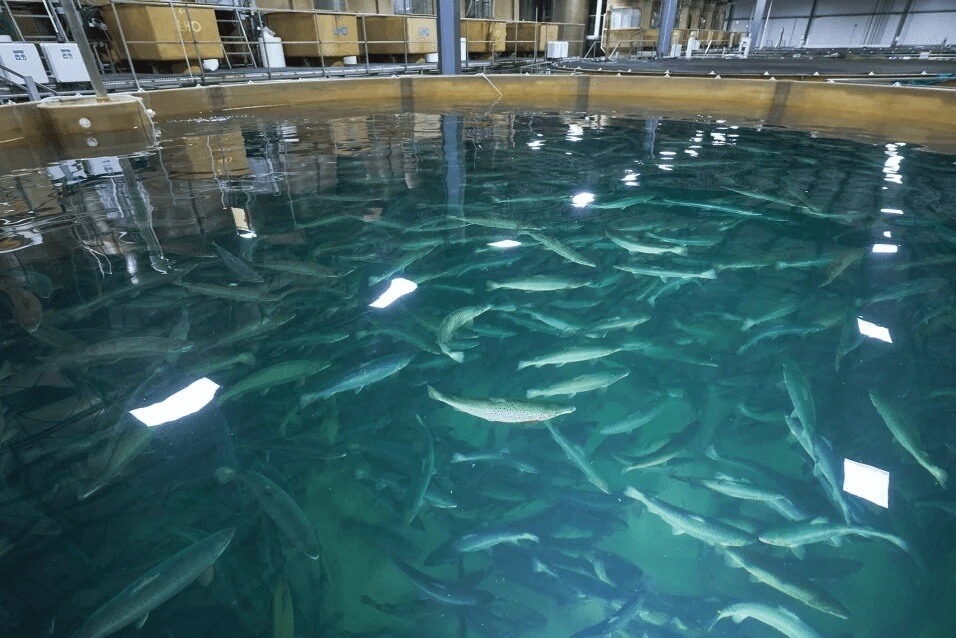
Salmon swimming in tank. Credit: AquaBounty

While this desirable fish option is now commercially available for some Americans and Canadians, it will take time to expand the number of production facilities sufficiently to serve national food retail chains like a Costco. Unfortunately my home state of California might never be on the list for local production. There is a state regulation against raising these “GMO” fish. There is no rational reason; it isn’t that there is danger of these fish getting loose in the Pacific Ocean (they are all sterile females and the tanks are secure). I’m still trying to trace the “logic” here, but ironically there is an exception in the state law for aquarium hobbyists to buy novelty “Glofish” that are genetically engineered to glow because they have DNA from jellyfish.
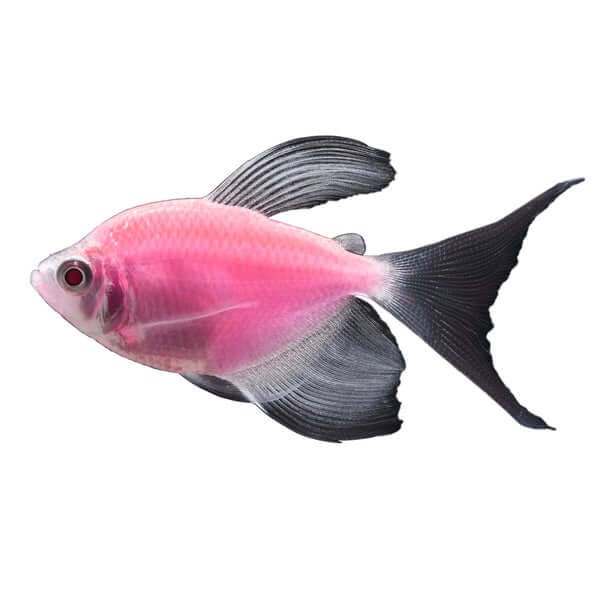
It makes no sense to allow anyone to buy cool“GMO” pets and not allow local production of one of the most resource efficient, environmentally friendly, safe, healthy and delicious food production options that will eventually be available to most regions.

What’s next?

If you want to know more about the label, and which foods or ingredients will be labeled as such, check out the USDA website and hear a good discussion featured in the first part of this podcast.

If you as a consumer are excited about these options and would like to see more innovative food products in the future, I would encourage you to seek them out in stores or on-line and to ask for them at your favorite retailers. Our best hope of overcoming the decades-long, fear-based campaigns against modern biotechnology is to finally “vote with our food dollars” and let our voice be heard through the comment boxes or websites that are available.

Monday, August 24, 2020

My comments to the USDA about de-regulation of a transgenic, disease resistant line of American Chestnut


File:PSM V84 D565 American chestnut mitchel county.jpg

The kind of tree that was once abundant in the US (Wikimedia commons)

For years, public sector scientists have been working on a remedy for the disease-related near extinction of the American Chestnut which was once the dominant large tree in the forests of the Apalacian mountains.  I've heard updates about this over the years at "biotech bootcamp" events and I admire the patience and resolve that they have demonstrated in this ambitious effort.  Here is what I wrote to the agency:

Submitted Sunday 8/23 tracking # 1k4-9ijy-kaf2


I am writing in support of the petition for deregulated status for a transgenic American Chestnut event which has been submitted by the State University of New York College of Environmental Science and Forestry. This submission is the culmination of a long-term effort to develop a means by which this key forest species could be restored to its historical role in the forest ecosystems of Eastern North America -  a role that has been seriously compromised since the accidental introduction of a fungus which is a deadly pathogen of Chestnuts.  Although it will certainly take a long time to re-establish such a long-lived species, this strategy is the best hope we have of  achieving that very desirable environmental outcome.


My graduate training was in the field of plant pathology at UC Davis in the late 1970s and early 80s, so I can appreciate the challenge of counteracting this disease of this in natural forest settings. Since that time, I have also had the opportunity to closely follow progress in the science of plant biotechnology in both academic and commercial research.  The decades of experience that now exist concerning the safe and beneficial applications of transgenic technology in global agriculture demonstrate that broad deployment of this advance in a forestry setting is also something that can proceed without any undesirable or unmanageable outcomes.  Indeed, as other commenters have noted, reestablishment of this species could be expected to contribute significantly to carbon sequestration and thus help to address climate change. (see https://pubag.nal.usda.gov/catalog/757823). This sort of solution also needs to be considered for other cases where introduced exotic pests compromise the health of our forests ( see https://www.ncbi.nlm.nih.gov/pmc/articles/PMC6680343/)


It is significant that this project has been carried out by non-commercial entities simply focused on environmental goals. As an indicator of that, the event in question ("Darling 58") was never patented. The plan has always been to make that and related lines available for free for backcrossing into lines from multiple public Chestnut breeding and restoration efforts.  Many of the other comments that have been submitted to APHIS about this petition are from those researchers who are awaiting the opportunity to be involved in those next steps.


The gene that was chosen for insertion into chestnuts is for the very commonly occurring enzyme Oxalate Oxidase or "OxO."  It has always been a part of the plant genome and the human diet so there are no anticipated problems if it is expressed in reintroduced trees. The enzyme is not fungicidal itself but rather detoxifies a chemical that the fungus produces to weaken the Chestnut tree's defense mechanisms.  That kind of trait is less likely to select for resistance, something that is very important since re-establishment will be a long-term project. It is also logical that the trait will be backcrossed into many Chestnut lines to insure sufficient genetic diversity since this species will face the need for adaptation to climate change and other challenges.


In the absence of negative outcomes from decades of plant biotechnology, the main objection to projects such as this tends to be based on the "precautionary principle" - the idea that there is no proof that nothing undesirable could ever occur.  As such, that objection fails to consider the consequences on not employing the technology.   In this case inaction would mean that important forest ecosystems will continue to lack the natural "keystone species" which is so important for the wildlife to thrive as it once did in these areas.  The objection to human intervention in a natural system is also flawed in that human activity has already occurred with the introduction of that destructive pest.  Indeed, it makes sense to employ the best solutions available to us as humans who strive to be good stewards of our environment. The deregulation of this transgenic event by APHIS is an excellent next step towards that goal.


Wednesday, May 1, 2019

Florida Citrus Industry Is Facing An Existential Threat From Bacteria, But A Virus Offers Hope


Orange Juice (Image by AlbanyColley, Pixabay)

(This article was originally posted on Forbes on 4/30/19) When I was growing up in the early 1970s there was a ubiquitous television ad promoting Florida orange juice including the line, "a day without orange juice is like a day without sunshine." That "dark day" could be approaching soon, at least in terms of the juices we get from the "Sunshine State" and the livelihood of the farmers who grow the trees that have long supplied us.

The iconic orange juice industry in Florida is facing an existential threat because of a severe bacterial disease of citrus that was introduced to the US from Asia in 2005 (the Asian Citrus Psyllid insect that helps to spread it was first found in Floria in 1998). A Florida homeowner may have inadvertently introduced the bacterium to the US in citrus budwood he brought home from Asia to graft onto his backyard trees.  The malady is often called "Citrus Greening," but in Asia it is known as Hualongbong and so we now tend to call it HLB. HLB has since spread to virtually all the back yard and commercial citrus trees in Florida, killing many of the trees and forcing the growers to struggle to keep the remaining ones alive with intensive nutrient feeding and other stop-gap measures.  


Oranges showing symptoms of "Greening" or HLB (USDA image)


In 2013 journalist Amy Harmon wrote an excellent article for the New York Times about the history of this crisis titled: "The Race To Save The Orange By Altering Its DNA."  She described in detail how this long-anticipated threat finally materialized and how the Florida growers funded university research to explore possible solutions including genetic engineering.  A biotech solution was identified using some defensive peptides that are naturally made by spinach plants, but as Harmon explained, that sort of "GMO" solution was a hard sell to the big, brand-sensitive juice companies who buy the oranges.  I have been personally disappointed to watch the way that the juice companies have acquiesced to the pressure to use a "non-GMO" label.  That unfortunate marketing ploy now appears on all the brands including the one company that relies exclusively on Florida fruit as opposed to a mix with imports. This is a classic case of how "control of the food supply" is really the in the hands of anti-technology activist groups, not the big companies most often so accused.


This is my current bottle of FL grapefruit juice, but I have to "hold my nose" when buying in because of the misleading "non-GMO" label (Ruby Red grapefruit was generated using mutagenesis breeding, no a problem but definitely "genetically modified")


But realistically, deploying a biotech trait like this in a perennial crop would be quite slow because the growers would have to start over with new trees or possibly graft onto the existing rootstocks and regrow the entire above ground part of the plant.  In the mean time, the industry has been steadily declining and the fear is that it will reach a point where it just isn't worth maintaining the juice plants.  Orange juice can certainly be imported, but for a time the Florida industry was able to distinguish itself by its better tasting "not-from-concentrate" advantage.  

This same destructive disease now threatens the citrus industries in other states.  The disease and its insect vector are already present in California, but for now it has been contained to mostly urban/suburban areas in the southern part of the state.  If it spread to something like the tangerine/mandarin groves of the Central Valley and other parts of the $3.4 Billion California citrus industry, that would be a disaster (think Cuties(r), Halos(r), lemons, navel oranges, grapefruit etc.)
From my current bag of mandarins (again sadly with the misleading non-GMO label)

But I'm happy to say that today I'm writing about a newer technological approach to deal with this disease.  An extended public comment period ran through Tuesday May 30th in which the USDA asked for feedback on the question of whether or not to approve the commercial deployment of a different way to protect orange trees from the HLB disease.  It is something which could possibly be implemented much more quickly than by genetically engineering the trees themselves.  This is something that could be presented in a way that would make it sound scary, but its really not. 

There is a virus that infects orange trees called Tristezea.  It also came from outside the US and began causing problems in all the citrus growing regions of the US in the 1960s.  At first it was also a lethal disease, but eventually it was found that by avoiding certain rootstock types, the virus could infect the trees with no symptoms at all.  (Virtually all fruit crops have been grown on rootstocks for a centuries).  In Florida today all but the youngest trees are infected with Tristeza, but with strains that are benign for trees when they are on the rootstocks now used.  The new biotech solution is to add genetic sequences for the spinach antimicrobial peptides to the RNA of the virus, and then get that virus to infect orange trees.  This could be done with new trees when they are in nurseries, but it may be possible to also "graft transmit" the virus into at least they younger trees already out in the commercial groves.  In this case that new small branch does not need to take over, it just allow the virus+peptides to move into the other parts of the existing trees.  In any case, modifying the virus is far more efficient than having to separately engineer and propagate each of the popular citrus varieties in the industry.

A small scale trial that was run for several years confirms that this sort of virus inoculation can make the trees resistant to the HLB pest and to allow full productivity.  As part of that experiment, trees with no virus were planted all around these test blocks and then followed to see if the engineered virus ever moved into them (the virus can be transmitted by aphids under certain circumstances).  In fact the virus didn't move, though even if it did it wouldn't be a big issue.  Also, over time the modified virus loses the genes for the spinach peptides which is then another barrier to any sort of unwanted spread.  Also it is clear that the Tristezea virus does not have any bad effects on other crops or wild plants since the virus has been very widespread for decades without causing problems in other species.

I've included the comments that I submitted to the USDA below concluding with my hope that the experience in Florida will pave the way for using a similar approach in California if we ever have to save that industry as well. I sincerely hope that the USDA does approve this new method and I sincerely hope that those who control the juice plants will both help the growers that supply them and trust consumers to be smart enough to listen to the logic about this technology.

This is the Website about the USDA comment process:

--> https://www.aphis.usda.gov/aphis/ourfocus/biotechnology/brs-news-and-information/2019_brs_news/ctv_reopen_april2019
This is the link for comments followed by what I submitted:


-->

I am writing in support of this release permit as I believe that it is a very logical strategy with the potential to literally save the citrus industry in Florida. If it proves successful it could play a similar role in the unfortunately likely scenario that HLB becomes a more serious threat to citrus production in other regions such as California. I am a plant pathologist with a Ph.D. from the University of California, Davis. My own work there was with fungal diseases, but I spent a lot of time in the lab of Dr. Robert Shepherd, a National Academy virologist. Starting at that time in the late 1970s I had many close colleagues who were working on the early stages of plant genetic engineering and I have continued to follow that field ever since. The progress of the field has been remarkable. 

In preparation for this comment I read all the available documents from the USDA site and corresponded with some of the university researchers who have done the relevant work on issues like the potential for recombination and transmission of the modified Tristeza virus.


This approach of using an asymptomatic strain of the virus is particularly logical for this perennial crop. To engineer the orange scion itself would require the generation of separate "events" in each of the important cultivars and then a delay to graft those onto existing trees and bringing that new "top" into bearing. Using the virus makes it far more feasible to utilize more than one combination of antimicrobial peptides which will help to prevent the development of resistance in the HLB bacterial pathogen population. 


There are several convincing reasons that this strategy is likely to be safe with regard to any potential for spread to non-target citrus or to other plant species. There is very low rate of aphid transmission even under ideal lab conditions. The track record of zero transmission to sentinel plants in the previous limited release further demonstrates that the modified virus is extremely unlikely to move beyond the intended trees. The fact that recombination will likely lead to loss of the peptide part of the viral genome is another safety factor and will again allow for the deployment of different peptides in a follow-up grafting step if that is needed down the line. The fact that the Tristeza strains to be used are already ubiquitous in Florida citrus represents a multi-decade "experiment" showing that this virus represents no threat to other species or to citrus that is grown on the rootstocks for which infections by these strains are asymptomatic. With the tremendous advances in the speed, sensitivity and affordability of genetic assays, it will be possible to rigorously monitor the efficacy and safety of the strategy. As for the anti-microbial peptides from spinach - long experience supports their safety from a food point of view.


I believe that this release can be the culmination of an exemplary example of an effort funded by the grower community and partnering with the public, academic community to employ state-of-the-art science.


Tuesday, March 29, 2016

Vermont-Driven GMO Labeling Could Have Troubling Unintended Consequences

This small state may soon alter the food supply for all Americans

(This post originally appeared on Forbes on 3/26/16)

Over the past week and a half, Mars, General Mills, ConAgra Foods and Kellogg announced that they had decided to start labeling whether their products contain GMOs nationwide, in compliance with a pending Vermont statute. They see this as a way to avoid the cost of maintaining multiple systems for different states.


These companies clearly state that they agree with the scientific consensus that there are no safety issues with biotechnology as it has been applied to crops. Nonetheless, many observers believe that the ultimate impact of the Vermont labeling law will be to encourage companies to seek to use more non-GMO ingredients. That would, of course, be a major victory for the organizations that have promoted labeling and who are actually quite transparent about their agenda of eliminating use of the technology all together.

However this scenario plays out, there are three interesting questions to consider.
  1. Why do so many consumers say they want GMO labeling?
  2. Why was anyone against labeling in the first place?
  3. What might be the long-term effects of this labeling requirement on our food supply?

Why do so many consumers say they want GMO labeling?


This has much to do with how you ask the question.  The term "GMO" is a misleading title made up by anti-GMO activists in Europe in the mid 1990s.  It stands for "Genetically Modified Organism," which isn't a very good term to use since virtually every crop and animal used for food today has had its genetics dramatically modified from what ever it once was in the wild.  However, since few consumers realize this, the term "GMO" has the negative emotive effect that was intended.

The genetic modifications of these plants were vastly 
more dramatic than any modern “GMO crop”

If you use emotive language to ask people about other scary-sounding foods, you can get the same reaction. I've asked many people, "do you think cloned fruit should be labeled?" Virtually everyone says "yes!" Then I explain that all fruit is "cloned" in the sense that it is vegetatively propagated by budding or from cuttings because if you grew it from seed you wouldn't get the same variety. People have been doing this for millennia, but if I use the emotive term "cloned" I can get a "label it" response.

I also sometimes ask, "do you think that food grown with products made from animal excrement should be labeled?"  Most people again say "yes" because I used an emotive term. In that case there is a small, but finite food safety risk associated with manures and composts, but we don't label it.

In any case, after 20 years of active efforts to create fear around plant biotechnology, the label is nearly guaranteed to be seen as a negative by many consumers. Again, that is exactly what certain parties hope.

Why was anyone against labeling in the first place?

On the surface this seems like a logical question, but there were rational reasons to oppose these labels. The FDA wants to reserve the exercise of its labeling authority for things with real, documented risk issues such as food allergies, not for something like biotech crops for which extensive studies show no unique risk.  Realistically, this has become a moot point. By allowing "non-GMO" and "GMO-free" labels, consumers are already being successfully recruited to buy this next example of "non-existence" food, following trends like "gluten-free," "fat-free," "zero cholesterol" and the like.  American consumers are so used to buying food for what it is not that we don't even see the absurdity.


Much of the non-GMO labeling is for products
from crops which have no commercial biotech versions anyway


The reason that the processed food industry opposed labeling for biotech crops has to do with the costs and liabilities associated with maintaining distinct product flows in these very large scale, very low profit margin businesses. It costs money to clean out all the equipment, bins, trains and trucks used for bulk handling.
Grain harvesting equipment and later handling 
are not conducive to easy segregation

Depending on tolerances, it also opens companies up to liabilities for "adventitious presence.”  In the absence of real risk, the costs just don’t make sense. “Identity preservation” of high value crops like apples, oranges or wine grapes is far more feasible, and it is routinely done, but for issues that matter like variety, appellation etc.

What might be long-term effects of labeling on the food supply?

This really depends on whether food companies have the courage to trust their customers enough to continue to use biotech-improved items even in the face of activist pressure. Will they stand-up for their decision (as the Girl Scouts have), or will they give in and start shifting to non-GMO ingredients?

Evidence suggest that many players will take the latter path and that will mean asking farmers to forgo crop traits that they have found to be very helpful. Returning to non-biotech will also make it harder for farmers to use environmentally-sound approaches like minimum-tillage. It will increase the need to spray for insect pests once controlled by Bt traits in the crops. The cost of those non-GMO ingredients will be higher, partly because of these disadvantages, but also because of what it will take to "identity preserve" the non-GMO harvest all the way down the handling, storage and processing stream.

Of greater concern is the possibility that food companies will be tempted to source cheaper version of these non-GMO ingredients from other countries. This has happened all too often for organic.  That will open up the U.S. consumer to environmental pollutants (e.g. heavy metals) and to pesticides that have long been banned here, but which are still made and used in places like China and India.  It will also mean getting items from regions that are much less attuned to the need to detect and exclude dangerous mycotoxins from the food supply.

If Vermont ends up initiating a trend towards more non-GMO products, we should be asking participating food companies to go on record promising that they won't import the ingredients if they are available from the U.S. or other countries that enjoy a general context of sound environmental, food safety, and pesticide regulation. Without such assurances, we could have a serious case of unintended consequences.

You are welcome to comment here and/or to email me at savage.sd@gmail.com